Yufuin is a small onsen town up in the mountains of Kyushu, and getting there is half the point: the sightseeing train from Hakata is the nicest journey we have taken in Japan. It is worth the effort to reach, and worth staying overnight rather than passing through.
Getting there
The Yufuin no Mori is the way to arrive, and it is worth planning the trip around. It is a dark green train with wood panelling inside and windows set high so you can see out properly, and it takes a little over two hours from Hakata in Fukuoka.
The journey is the reason to take it. The line climbs out of the city and into rolling green hills, past rice terraces and small farms and through country that is far more lush than most people expect of Japan. There is an observation car at the front, and people stand in it the whole way.
Book ahead. There are only a few trains in and out each day, so this needs planning rather than turning up.
Plenty of tour companies run day trips by coach. If you can take the train instead, do. Arriving by coach turns the best part of Yufuin into a car park.
Onsen and ryokans
Yufuin is built around its hot springs. Most ryokans have their own baths, some open to the public and some for guests only.
Baths are separated by gender. If you have not done this before, the etiquette matters more than the water: wash thoroughly at the taps before getting in, and leave the towel out of the bath.
Our ryokan catered to gluten free meals without fuss, which is not something I take for granted. Ours also ran a free shuttle from the station, worth asking about when you book.
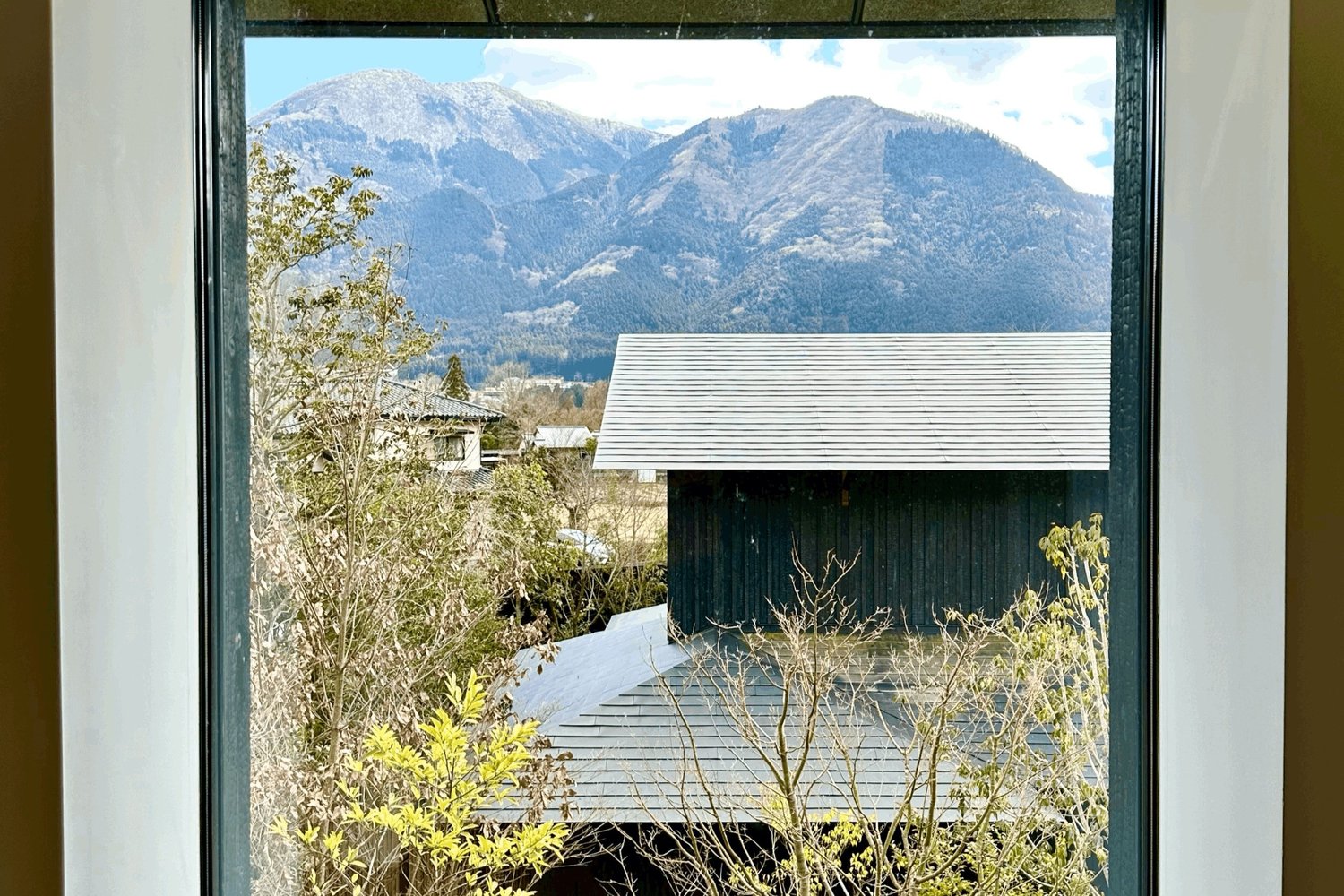
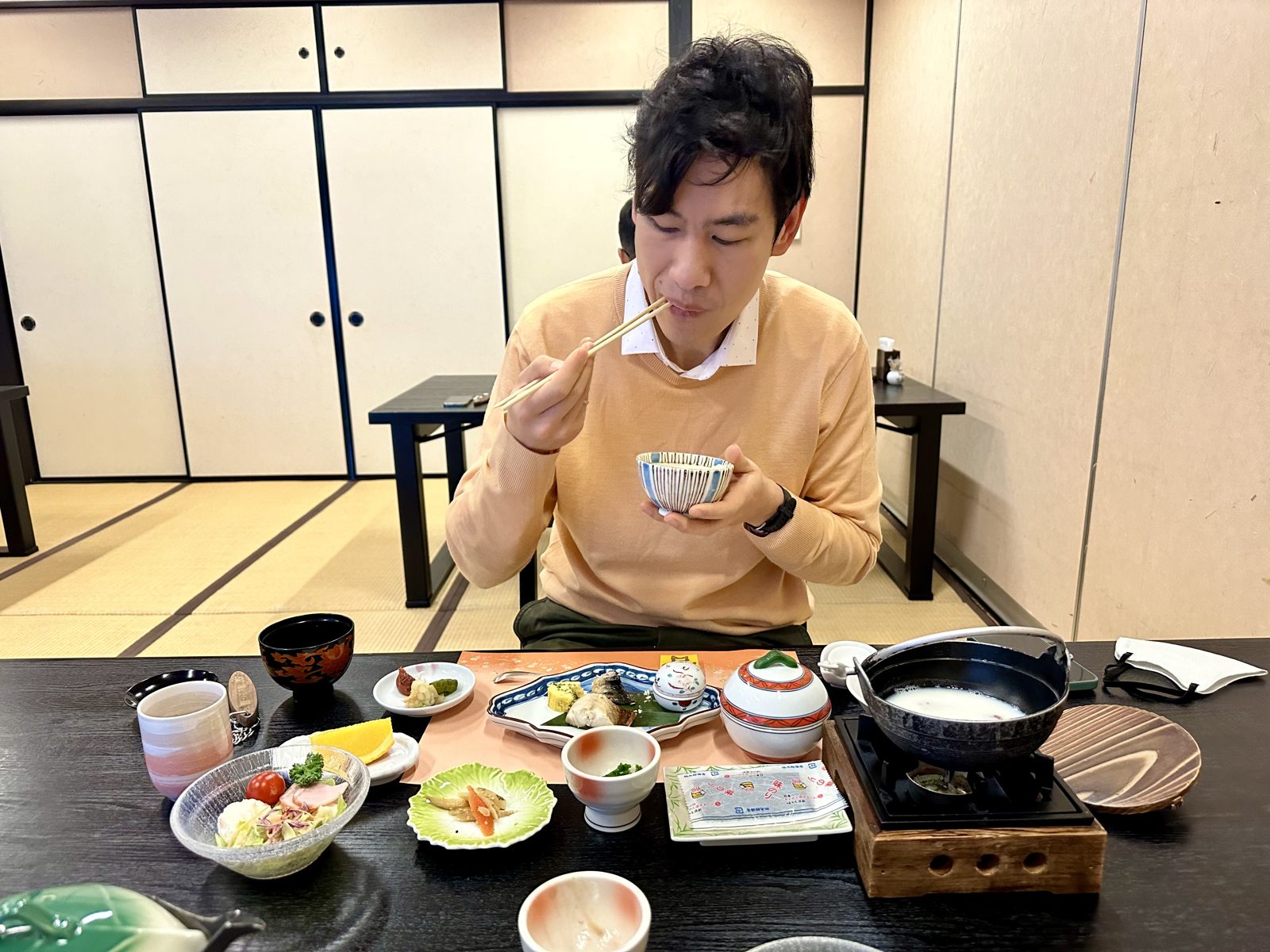
Dinner and breakfast are usually served in the room, kaiseki style: many small dishes brought out together, on a low table, on tatami. This is half of what you are paying for. The other half is the window.
Comico Art Museum
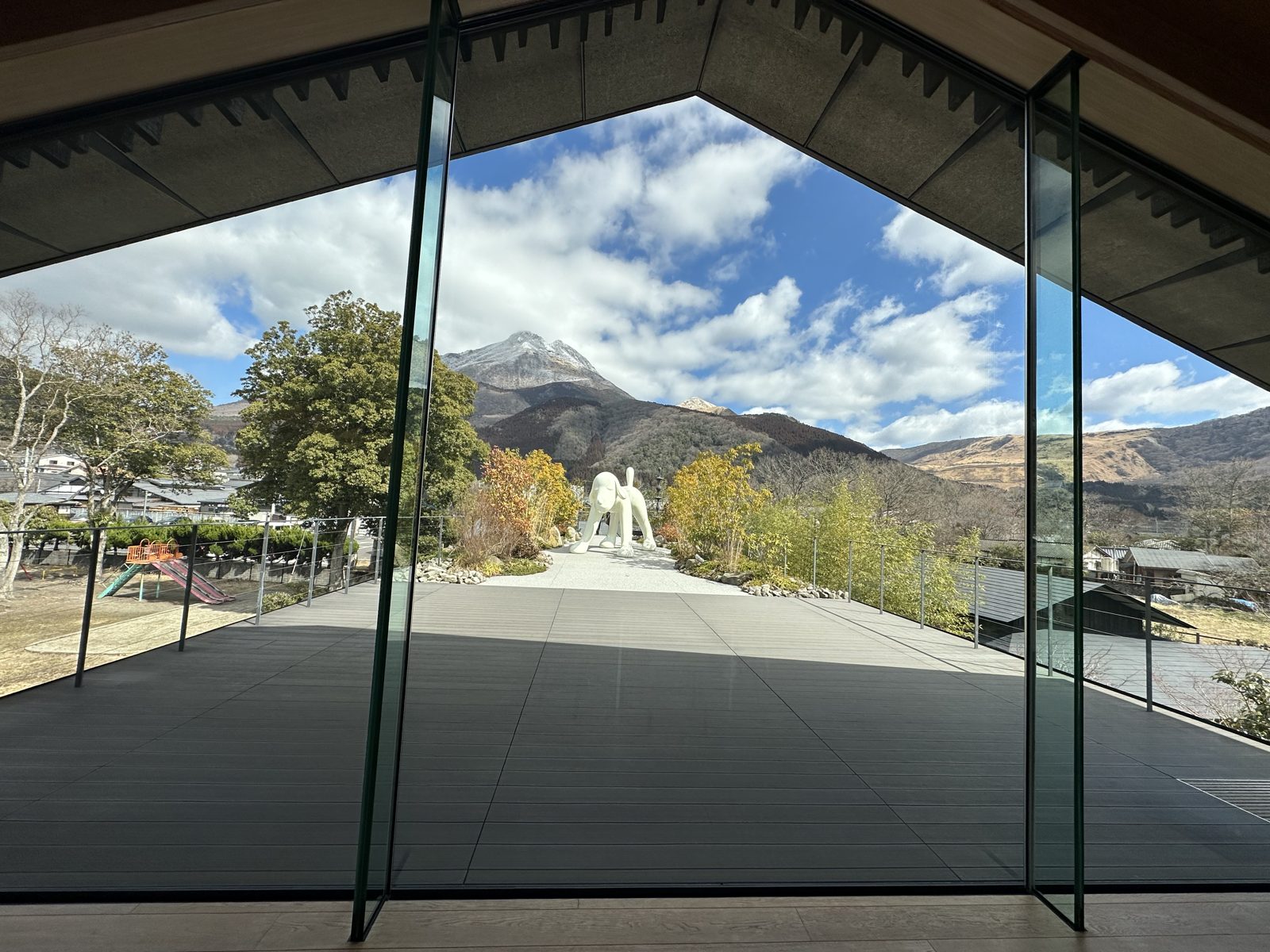
Small, and better than it has any right to be. Works by Yoshitomo Nara, Yayoi Kusama and Takashi Murakami, a library, and a rooftop terrace.
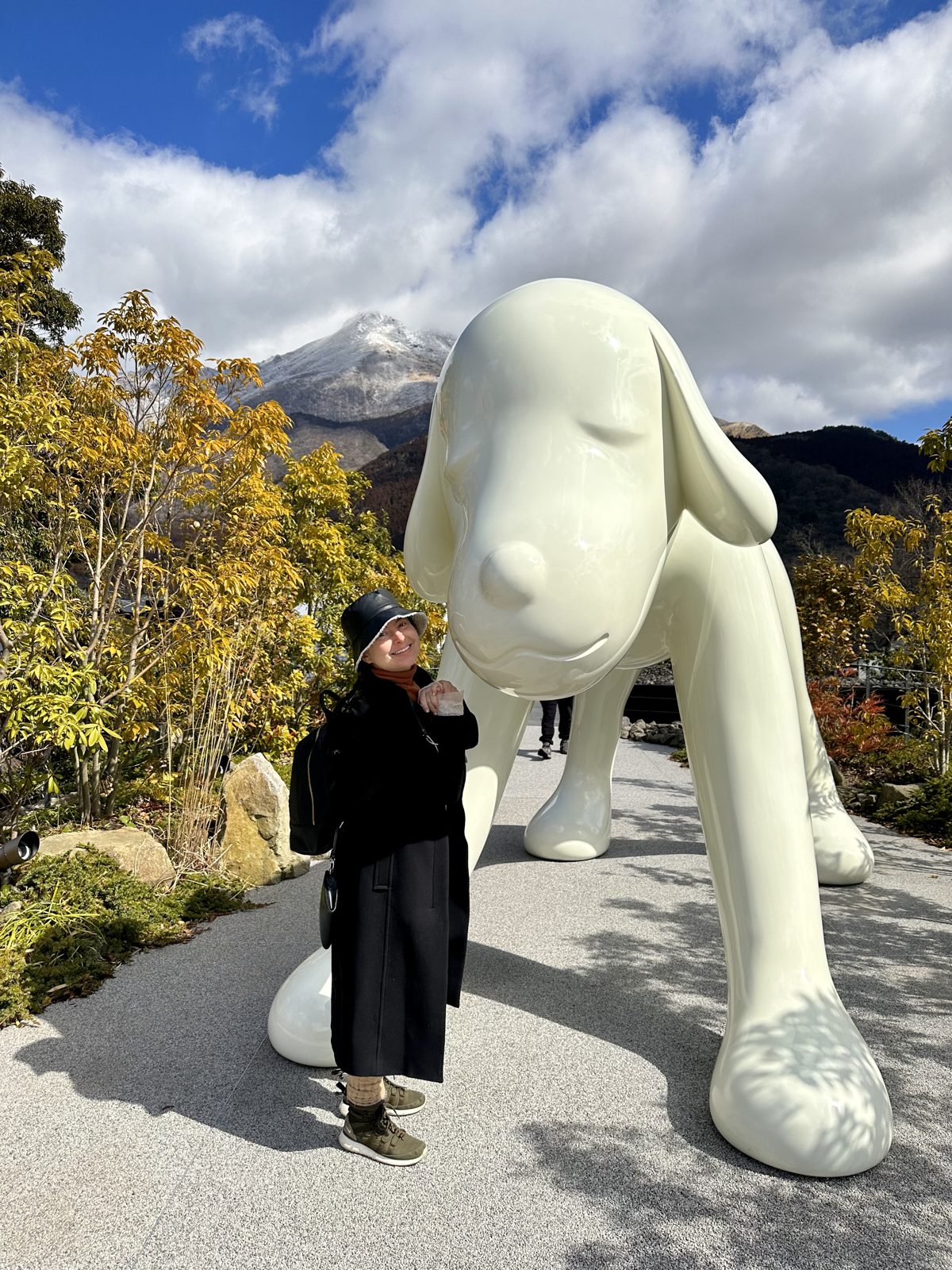
Go up to the terrace. Yoshitomo Nara’s giant white dog stands out there, head down, ears hanging, about three times the height of a person, and directly behind it is Mount Yufu with snow on the top for a good part of the year. A cartoon dog and a volcano in the same glance is a strange thing to be looking at, and it is the image we came away with.
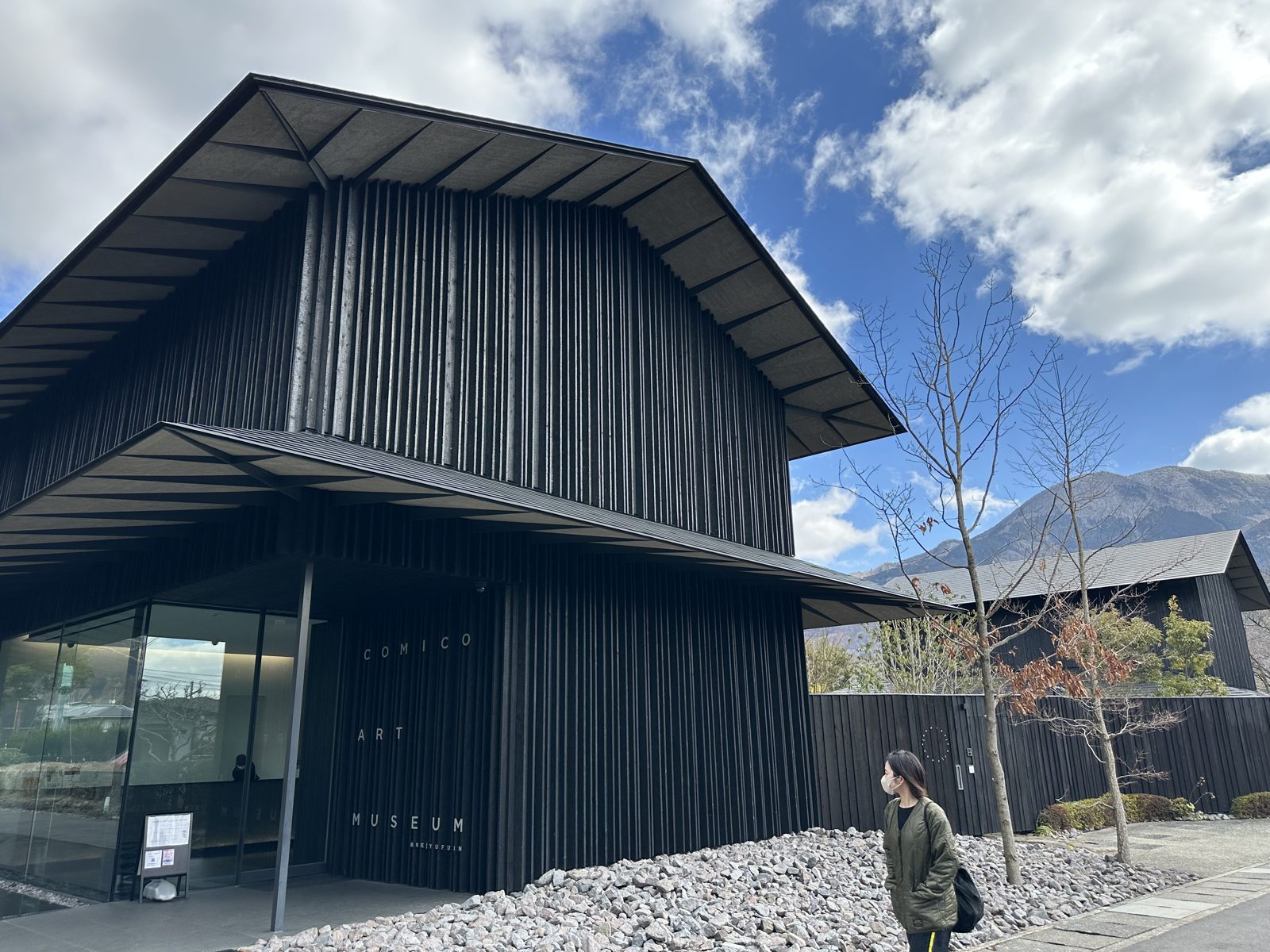
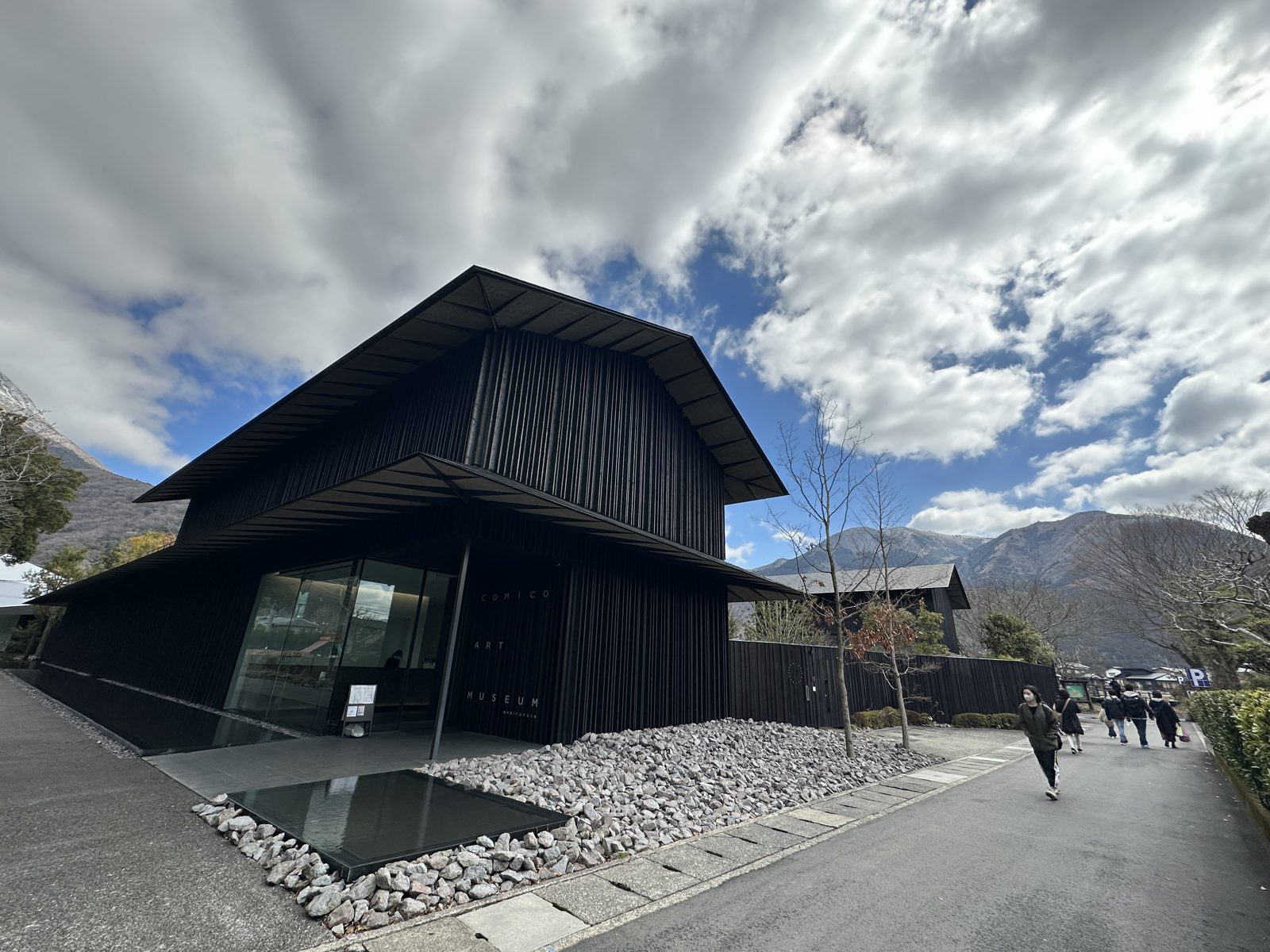
The building is by Kengo Kuma and worth a minute on its own before you go in: black charred cedar boards, deep overhanging eaves, and the mountain framed at the end of it. He is the architect behind Tokyo’s Olympic stadium, and the same instinct is at work here, timber rather than concrete and a building that sits into the landscape instead of on top of it.
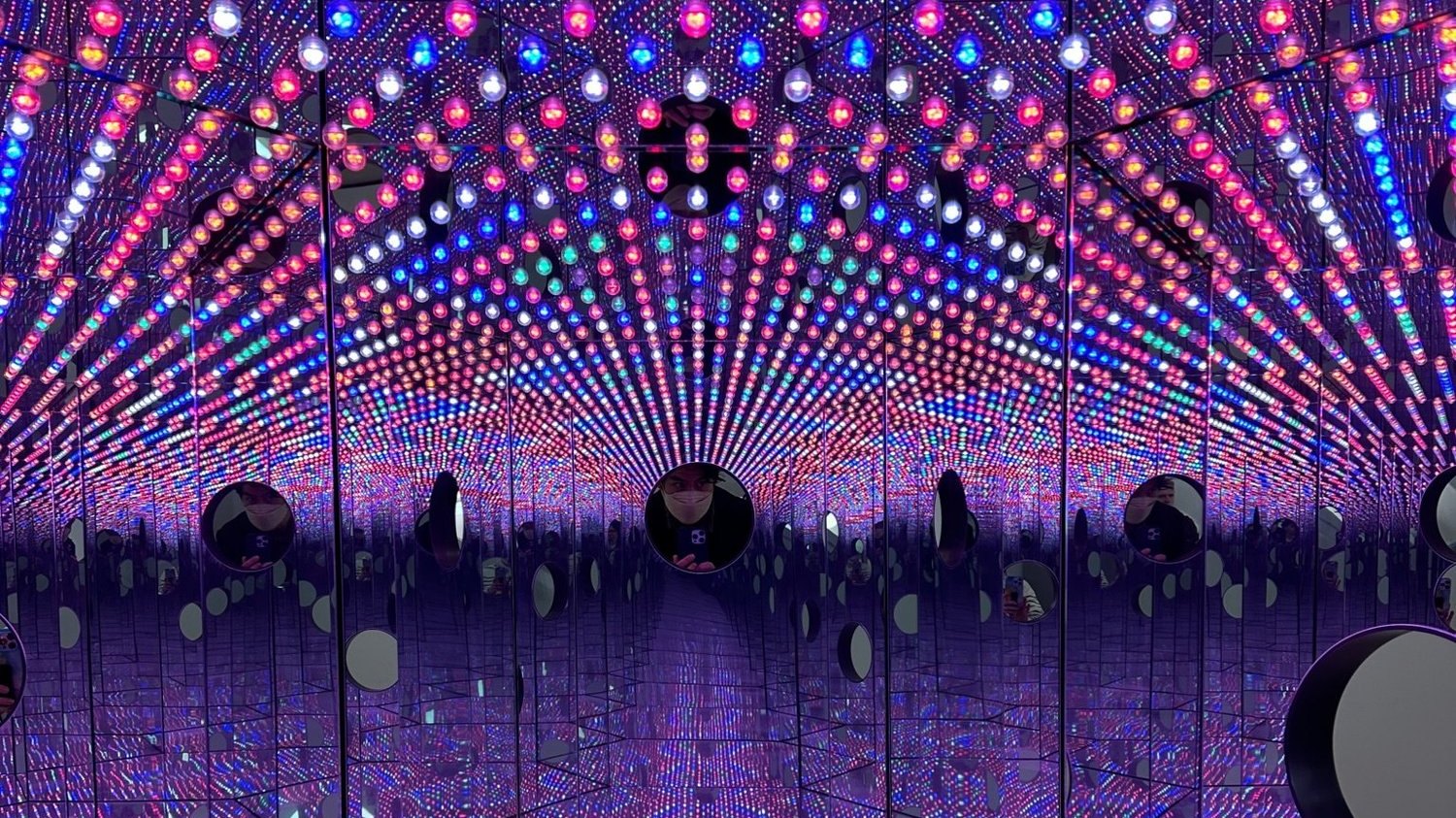
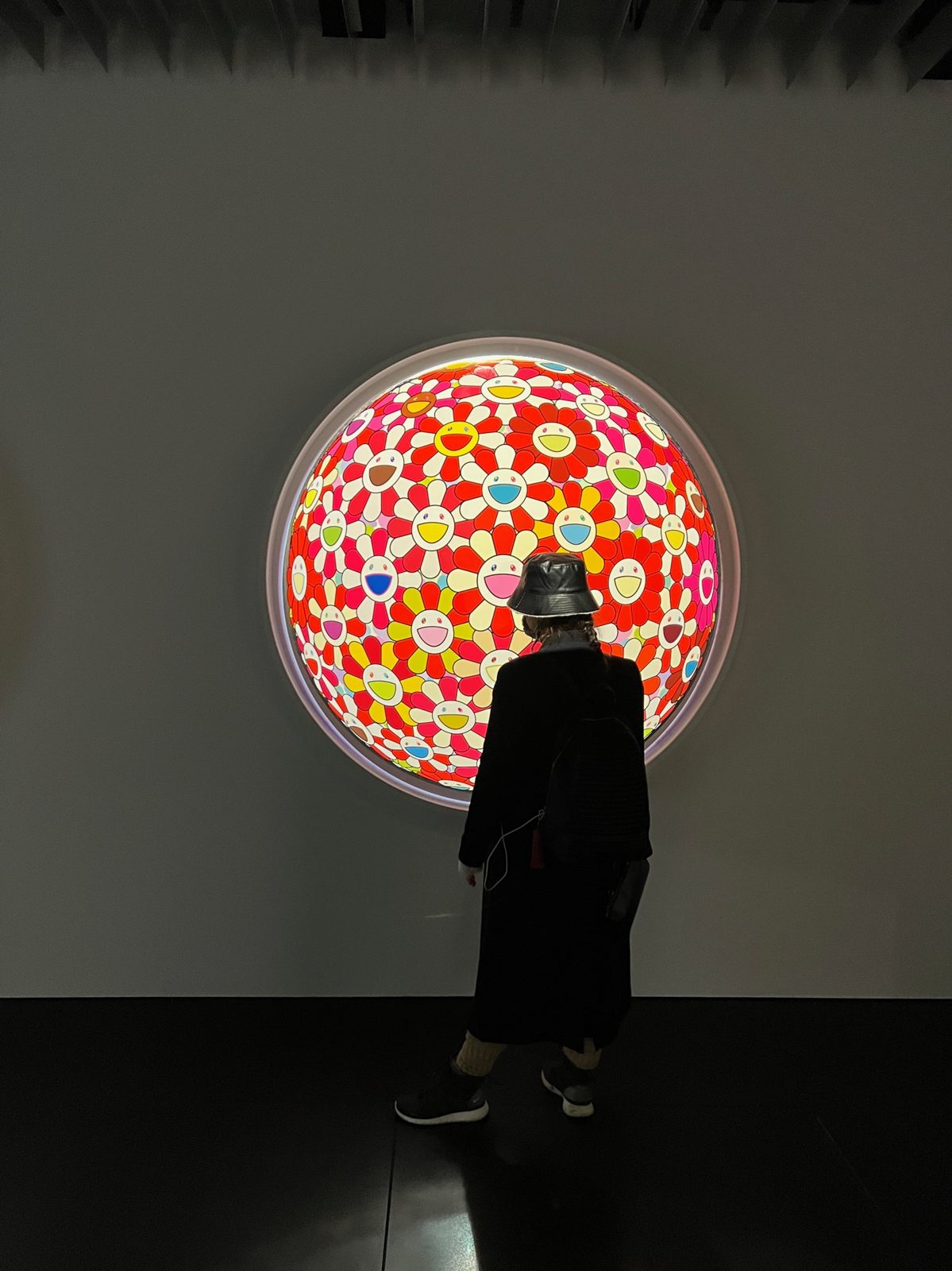
There is also a Murakami: a circular panel of his grinning flowers, lit from behind in an otherwise dark room, which is the only bright thing in it.
1 of 5
Yufuin Floral Village
Flowers, small craft shops, and a petting zoo with some very friendly goats. It is unashamedly built for photographs, and pleasant enough on that basis.
What to eat
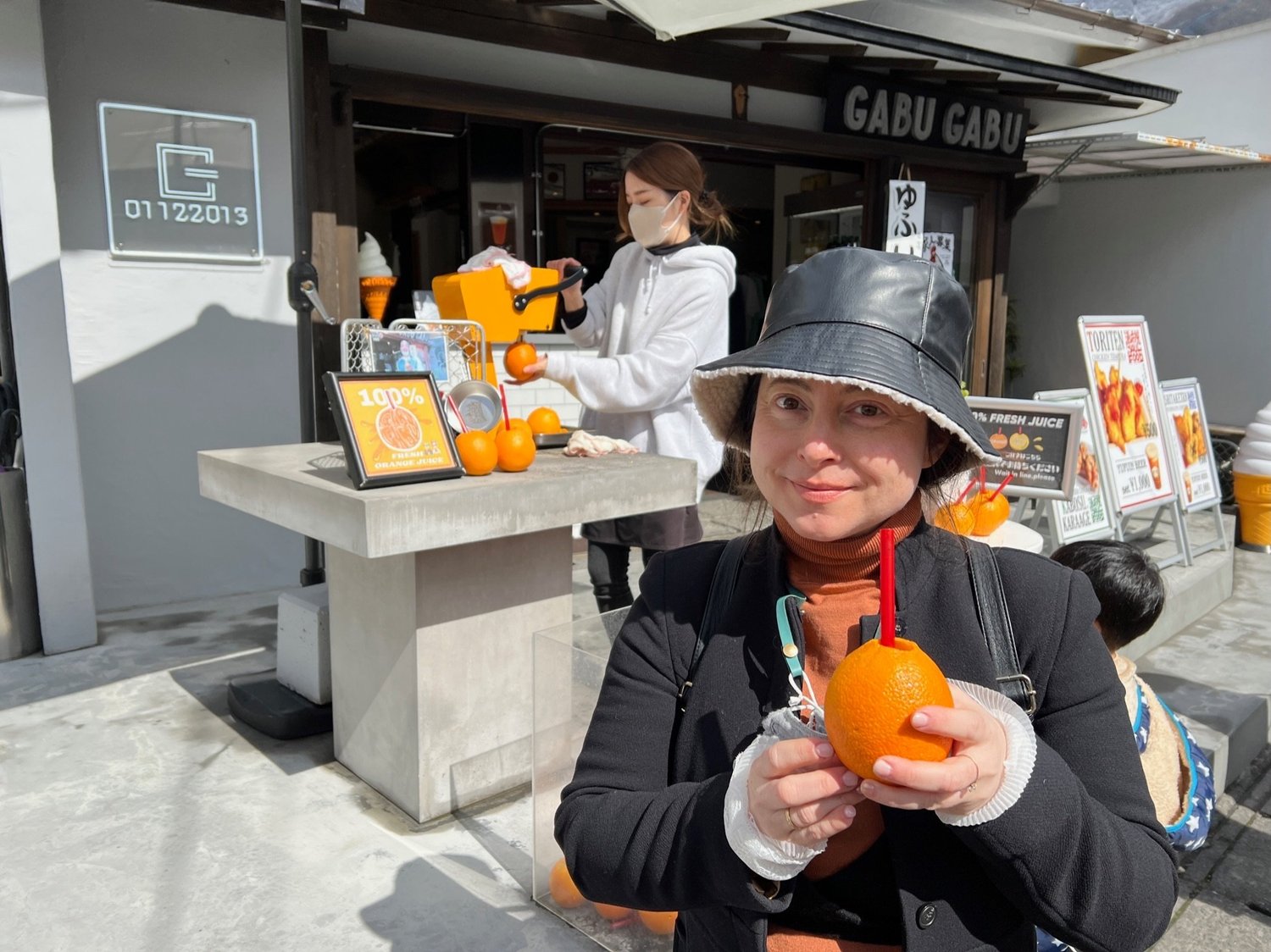
The local goods market sells yuzu spice blends, which is a citrus grown in the region and worth bringing home.
Do not skip the Japanese sweet potatoes. I bought one out of a hot case at a tiny shop and it was the sweetest I have ever had. It looks like a plain snack and is not.
A lot of Korean visitors
Kyushu is close to South Korea, and Yufuin is popular with Korean travellers. We heard more Korean spoken in this small mountain town than anywhere else in Japan.
Stay the night
This is the real advice. In the late afternoon the tour buses leave and the town empties out.
That is when Yufuin is at its best: kaiseki dinner at the ryokan, then the onsen, then quiet.
More from Japan.