Miyajima, Japan
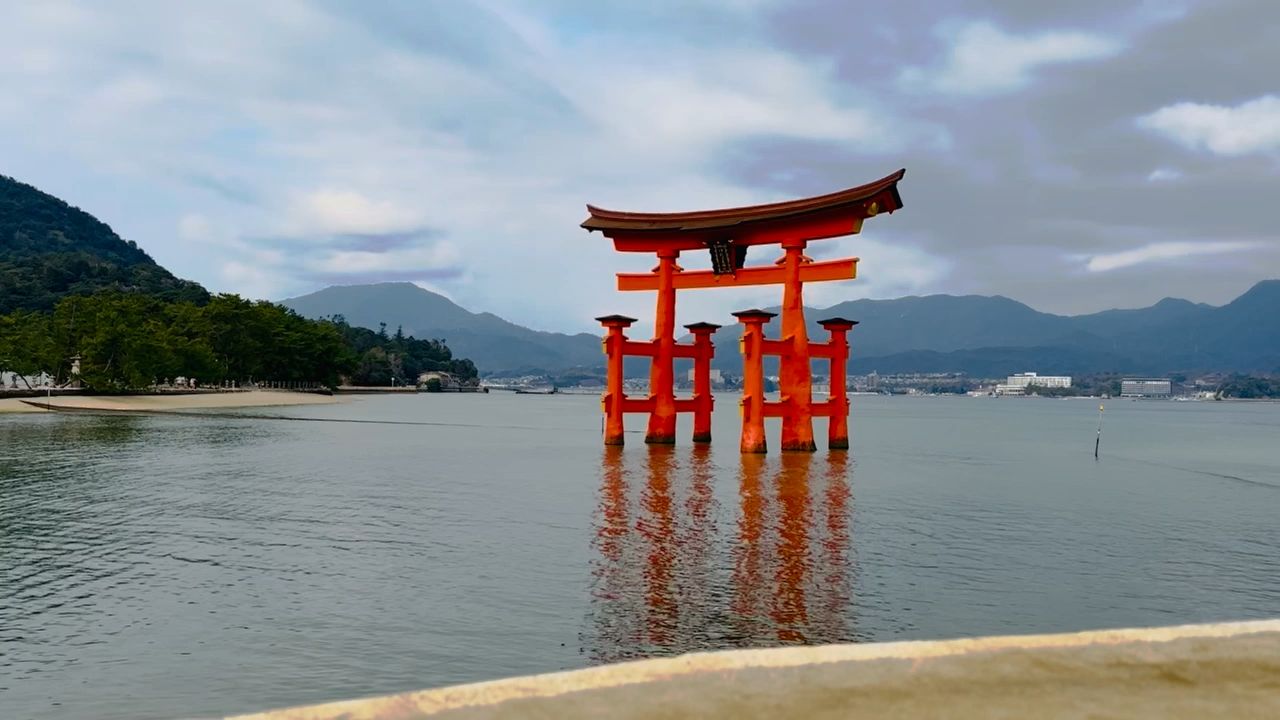
Do not day trip Miyajima if you can avoid it. Almost everyone arrives from Hiroshima on a morning ferry and leaves before dinner, so the island is shoulder to shoulder from ten until four and nearly empty either side. Stay a night and you get the other version, the one with the torii gate standing in the water and hardly anyone watching it.
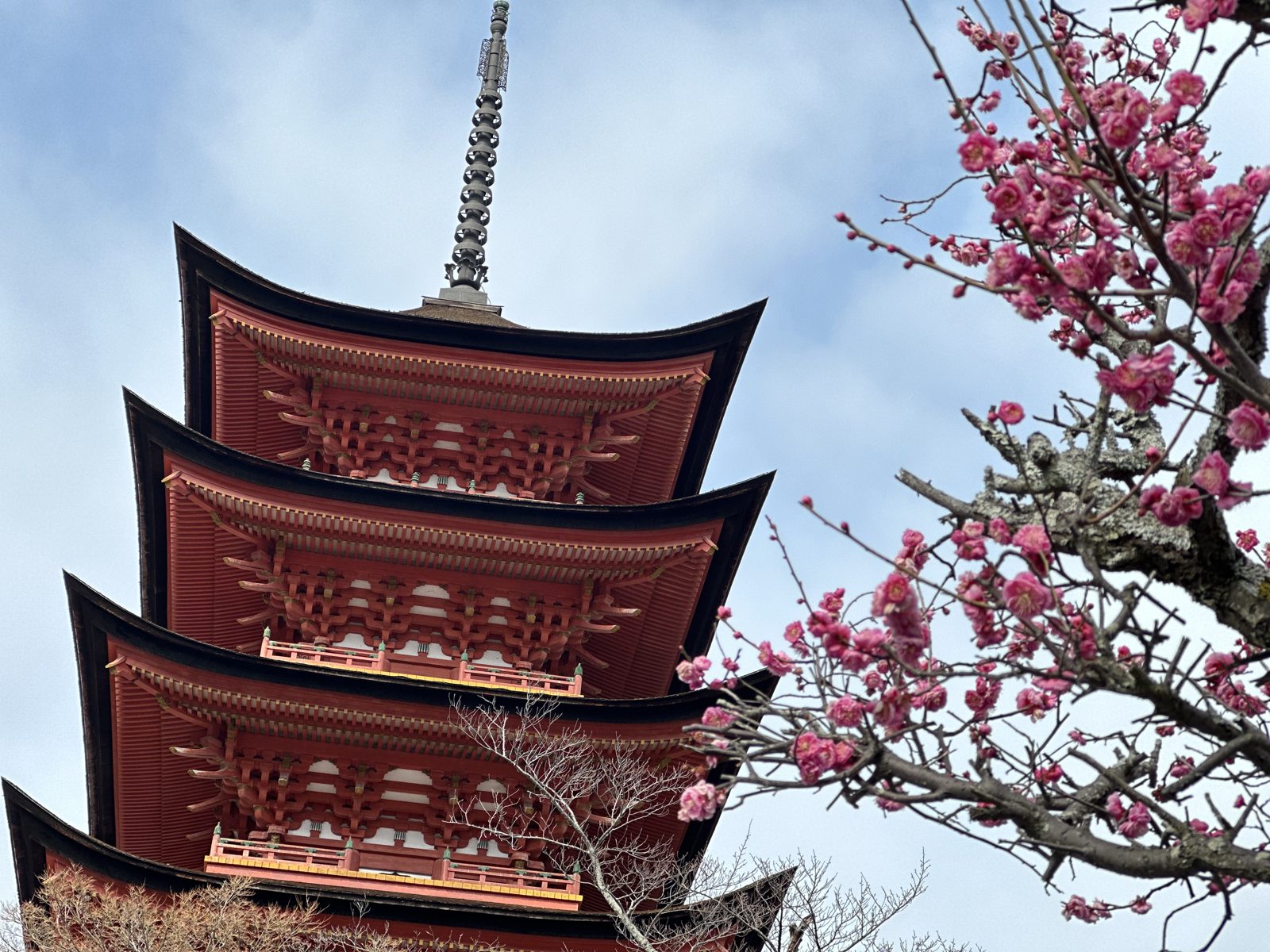
The five storey pagoda on the hill above the shrine is the other thing to walk up to, and almost nobody does. In late February the plum comes out around it, weeks before the cherry blossom that everyone plans their trip around.
The gate is not attached to anything
This is the thing worth knowing before you see it. The torii is not fixed to the seabed and not held up by pilings. It stands under its own weight. The six pillars simply rest on the sand, and the crossbeams above are packed with stones to weigh the whole thing down.
It has been rebuilt many times, and the current one dates from 1875.
Tide decides your visit. At high tide it stands in the water and looks like it is floating, which is the photograph everybody wants. At low tide the water goes out far enough that you can walk right up and stand underneath it, which is the better experience of the two and gets far less attention.
Check the tide table before you book the ferry. Both are worth seeing, and if you stay the night you get both.
Itsukushima Shrine
The shrine is built out over the water on stilts for the same reason the gate is out there: the island was held sacred, so ordinary people were not to set foot on it. Commoners approached by boat, through the gate.
The rules went further than that. For centuries no one was allowed to be born or to die on Miyajima, and there are still no cemeteries and no maternity hospital.
The deer
They are everywhere and entirely unbothered by people.
Warning
Unlike Nara, do not feed the deer here. No crackers are sold on the island and signs ask you not to, because Miyajima is trying to undo the habits that feeding created.
They will still try. They eat paper, so keep your ferry ticket, your map and your receipts somewhere they cannot reach. This is not a joke and it happens to somebody every day.
Mount Misen
The highest point on the island at 535 metres, and the view over the Seto Inland Sea is the reason to go up.
There is a ropeway most of the way, then about twenty minutes of walking to the summit, which surprises people who assumed the ropeway went all the way. Walking up instead takes an hour and a half to two hours on well made paths.
Wild monkeys live on the mountain. Keep food out of sight.
Daisho-in
The temple most people skip because it is uphill and away from the water, which is exactly why to go.
It is full of small stone statues in knitted hats, a cave of lanterns underneath, and a staircase lined with metal prayer wheels you spin as you climb. Spinning all of them is said to carry the same merit as reading the sutras, which is a good deal.
What to eat
Hiroshima Bay produces most of Japan’s oysters and Miyajima grills them on the main street. Get them grilled rather than fried.
Momiji manju are the local cakes, shaped like maple leaves and filled with red bean, custard or chocolate. Several shops make them in front of you and they are best warm.
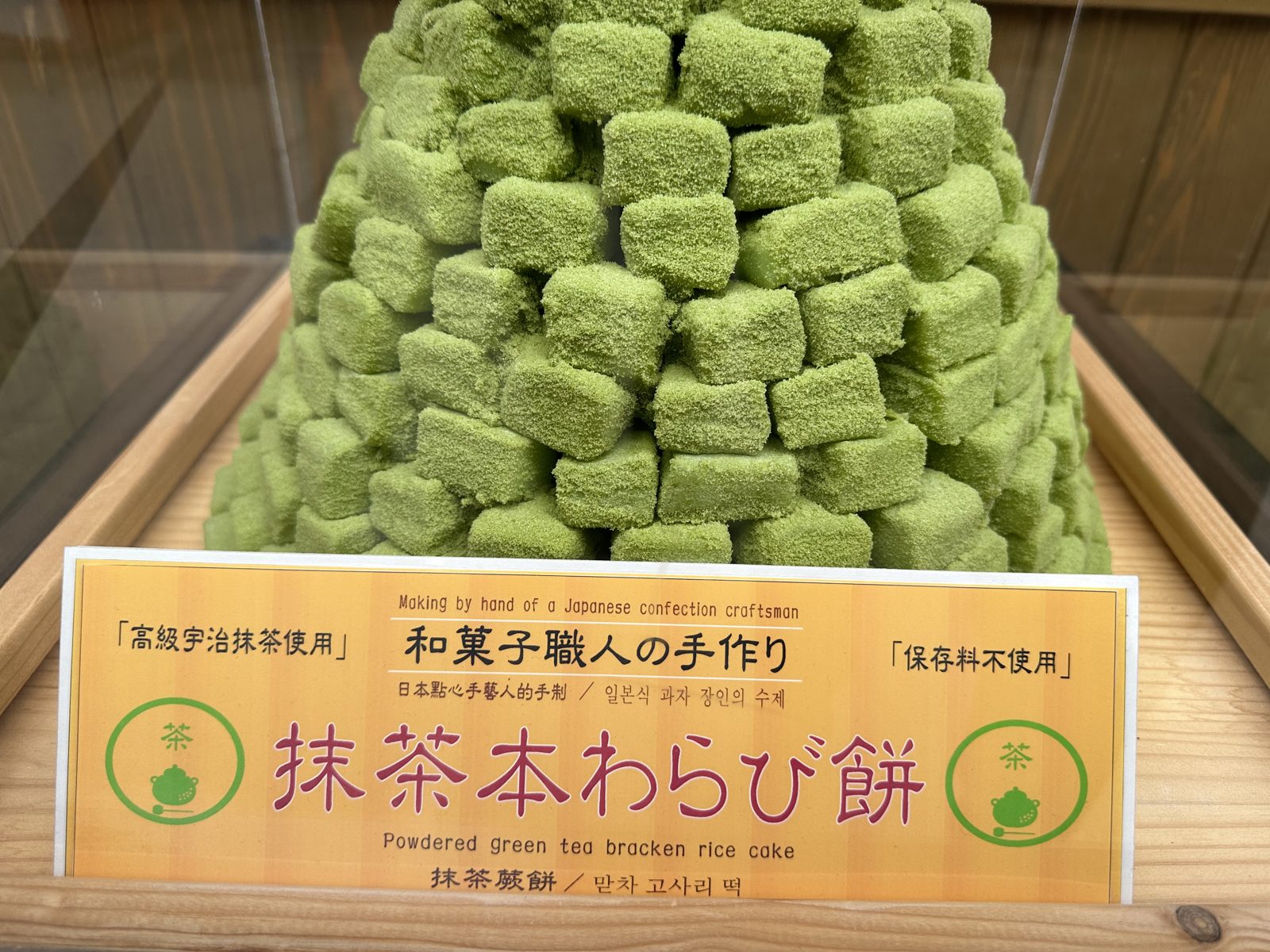
Matcha warabi mochi is sold in stacked cubes under a heap of green tea powder. The English signs call it a rice cake, which it is not: warabi mochi is made from bracken starch, so it is softer and more jelly-like than mochi, and it happens to be gluten free.