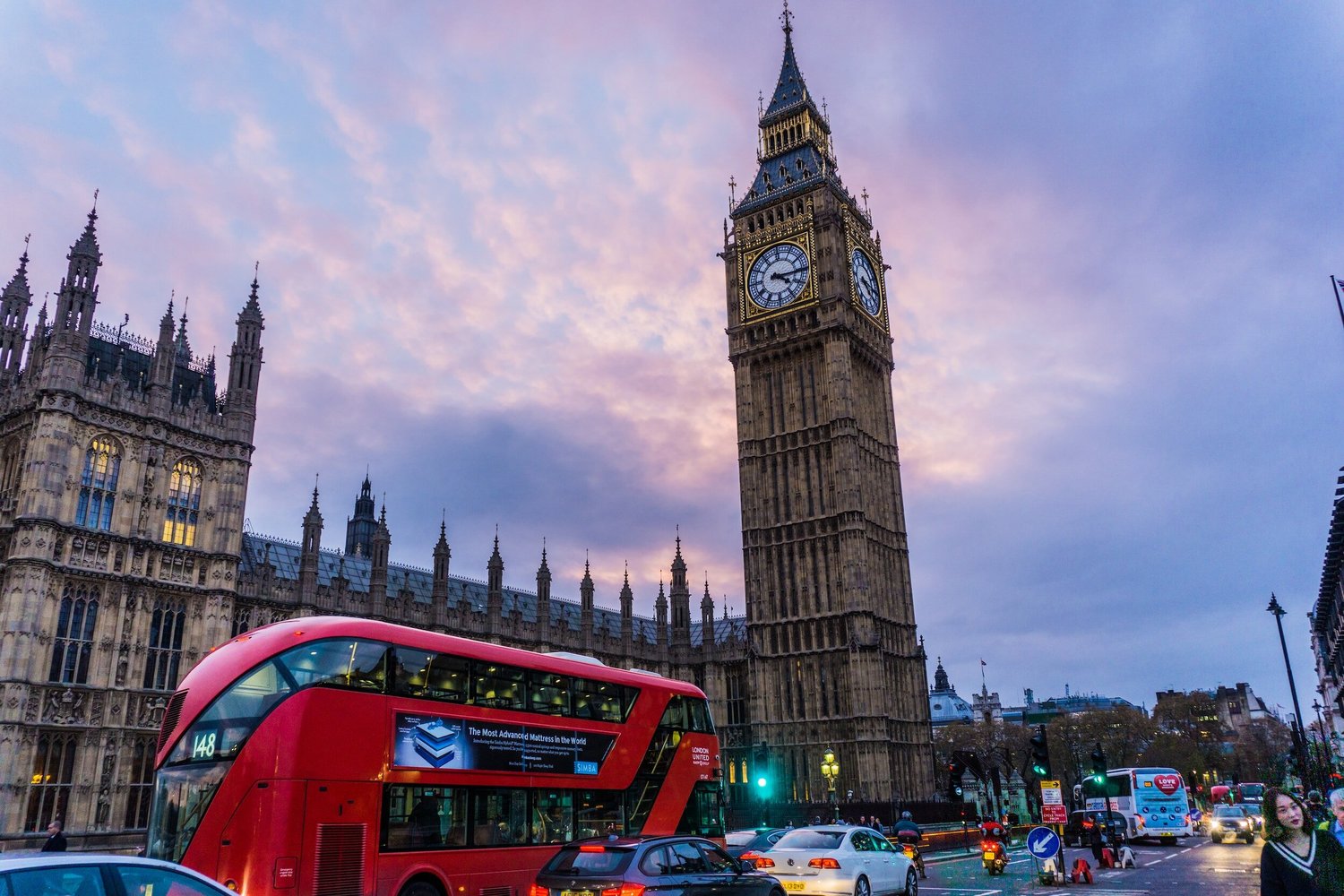
London // UK
London is really a few hundred villages that grew into each other and never quite agreed to become one thing. Big Ben is the bell, not the tower. The tower is called Elizabeth Tower, and almost nobody uses that name. Stroll along the River Thames, where the London Eye offers panoramic views of the city. Buckingham Palace opens its state rooms in summer only. The British Museum is free, and always has been. The West End is the theatre district. Camden and Portobello are the markets people actually browse rather than buy at. The pub is the living room most Londoners do not have at home. Nearly half of London is green space, which is the part that surprises people who expected only grey.
The V&A, and the two rooms nearly everyone walks past
The Victoria and Albert is free, it is enormous, and most people do the famous halls on the ground floor and leave. Two things are worth changing your route for.
The glass wing. Go for the staircase. The balustrade is a Danny Lane piece from the early nineties, built from around 160 stacked columns of float glass, bolted into place and then twisted so the whole thing reads as one undulating form rather than a row of posts. Glass used as a structural material and as sculpture at the same time, in a gallery full of objects made of the same stuff. It is the best thing in the museum that is not behind a rope.
The ceramics, at the very top. Take the lift to the top floor. The ceramics galleries run on and on up there, case after case after case of them, and they are almost always empty of people. The sheer quantity is the point: it stops being about any single pot and starts being about how long humans have been doing this and how many ways they have found to do it. Give it half an hour you had not planned.
Tip
Do the V&A backwards. Lift straight to the top for the ceramics while you are fresh and the floor is quiet, then work down through the glass wing, then the famous rooms on your way out. Everyone else is going the other way.
Some notable things to do in London, England:
Theatre:
- West End: The world-famous West End is home to some of the best theaters in the world, with shows ranging from musicals to plays to comedies.
- National Theatre: One of the most prestigious theaters in the world, the National Theatre produces a variety of critically acclaimed productions.
- Royal Shakespeare Company: Known for its productions of Shakespeare’s plays, the Royal Shakespeare Company also produces a variety of other shows.
Museums:
- British Museum: One of the largest and most comprehensive museums in the world, the British Museum houses a collection of over eight million objects from all over the globe.
- Natural History Museum: A great place to learn about the natural world, the Natural History Museum has exhibits on dinosaurs, animals, plants, and more.
- Tate Modern: A museum of modern and contemporary art, the Tate Modern houses a collection of over 70,000 works.
- Science Museum: A great place to learn about science and technology, the Science Museum has interactive exhibits on everything from space exploration to the human body.
- Victoria and Albert Museum: A museum of art and design, the Victoria and Albert Museum houses a collection of over 2.3 million objects.
Attractions:
- Buckingham Palace: The official residence of the British monarch, Buckingham Palace is open to the public during the summer months.
- Tower of London: A historic castle that has been used as a royal palace, a prison, and an execution site,the Tower of London is now a popular tourist attraction and home to the Crown Jewels.
- London Eye: A giant Ferris wheel that offers wide views of the city, the London Eye is one of London’s best known landmarks.
- Trafalgar Square: A public square home to Nelson’s Column and the National Gallery, Trafalgar Square is a popular gathering place for Londoners and tourists alike.
- Houses of Parliament: The seat of the British Parliament, the Houses of Parliament are one of London’s best known landmarks.