A university, not a theme park about one
Oxford is about an hour from London and it is tempting to treat it as a day of photographs. It rewards the opposite. The colleges are places people actually live and work in, term is in progress for most of the year, and the best of the city is the parts where that is obvious: a bike chained to iron railings, a porter telling you which quad you may cross, somebody carrying a stack of books across a lawn you are not allowed to walk on.
The university has no campus. It is thirty-odd colleges scattered through the middle of a small city, which is why the whole place feels like a university rather than having one in it.
The five colleges that stayed with us
You cannot do all of them and you should not try. These are the ones we still think about.
One thing first, because it will shape how you spend your time: the dining halls are the most fun part of any college. Not the chapels, not the quads, good as those are. The halls are long dark rooms with high tables at one end, portraits of several centuries of people glaring down at the students who have to eat under them, and they are still used three times a day. You are standing in a room that is in use, not a room that has been preserved. Every college has one and they are all worth seeing, so if you are choosing what to pay for, choose by the hall.
Tip
Halls close to visitors when they are being used, which is usually the middle of the day and again in the early evening. That is the single most common way people turn up at a college and miss the best room in it. Go in the morning, or check the opening hours for the specific hall before you walk over.
Magdalen, said as “maudlin”, has the best grounds of any of them. There is a deer park, an actual one with actual deer, a water meadow, and Addison’s Walk, a tree lined circuit around an island in the River Cherwell. The walk is named for Joseph Addison, a fellow here from 1698, who used to do laps of it and then write about landscape gardening. Founded in 1458, and the Great Tower is the one you see first coming into the city from the east.
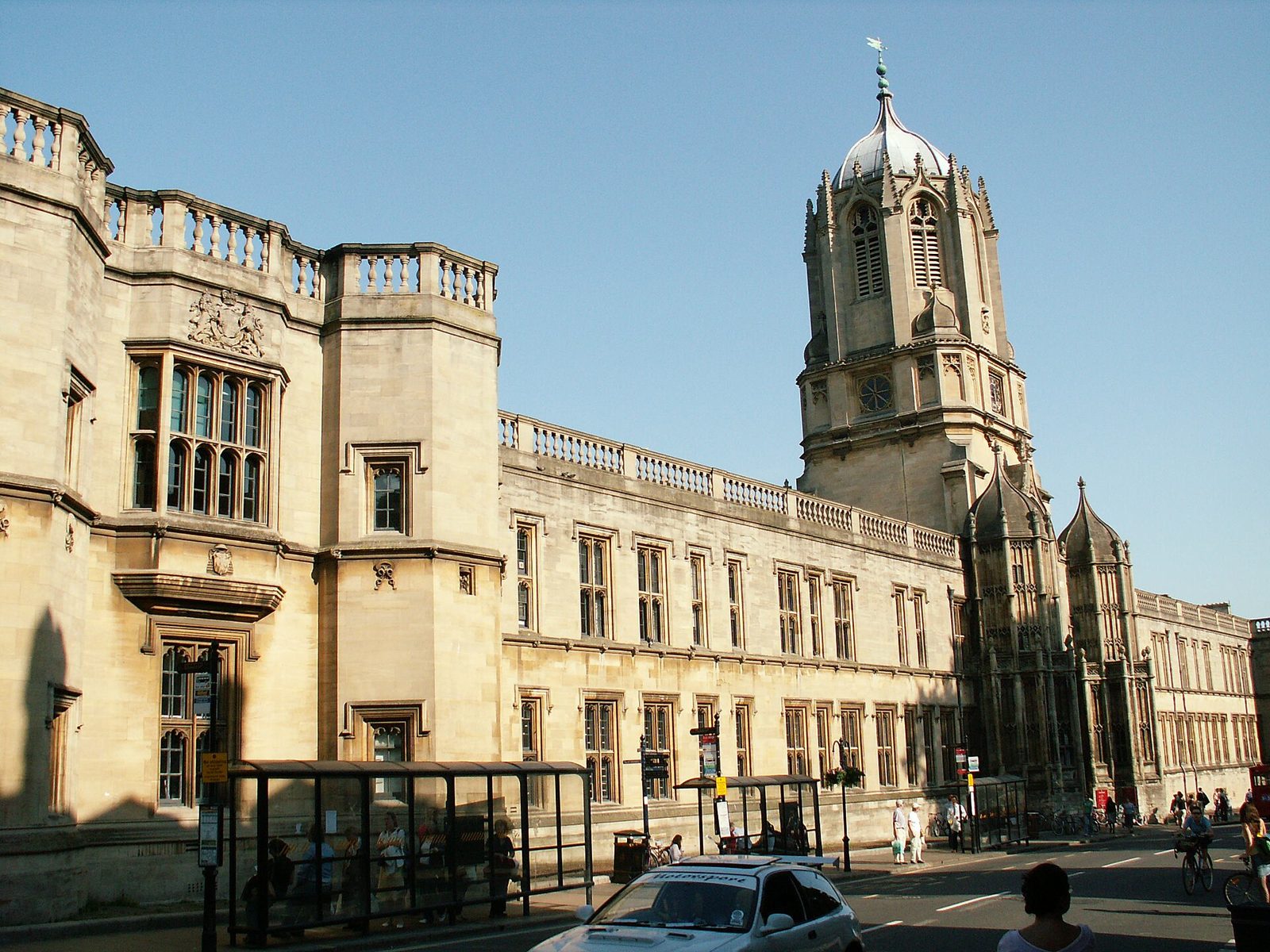
Christ Church is the grandest. In under Tom Tower to Tom Quad, the largest quadrangle in Oxford, then the Great Hall, which is the room the Hogwarts dining hall was modelled on. It is a working college and a cathedral at the same time, which nowhere else in England manages.
Balliol has the better claim to being the oldest. Founded in 1263, it is the oldest academic institution in the English speaking world still standing on its original ground. The part worth knowing is who finished it: John de Balliol died five years in, and his widow Dervorguilla of Galloway put up the money and wrote the statutes in 1282, which makes this almost certainly the oldest college anywhere co-founded by a woman.
Trinity is next door to Balliol, and they have been needling each other since at least 1583, when Balliol accused Trinity of not being properly Protestant. Trinity has the gardens, and being on the same stretch of Broad Street you can see both in the same half hour.
New College is the one with the joke in the name. It was new in 1379, and it has never got round to changing it. Two things make it worth the entry. The medieval city wall runs through its grounds, because William of Wykeham was given the land on the condition that he maintain Oxford’s defences, and the college is still bound by it. And the cloisters hold an enormous holm oak that Harry Potter readers will recognise as the tree Draco Malfoy gets turned into a ferret under.
Tip
Christ Church limits numbers and sells out. Tickets go on sale every Friday at 10am for the following week, so book then rather than hoping on the day, especially in summer. The others are cheaper, quieter, and several of them are free outside term.
The Radcliffe Camera and the Bodleian
The Radcliffe Camera is the round one on every postcard. It went up in 1737, paid for by a royal physician, and it is still a working reading room rather than a monument, so you see it from the outside, from Radcliffe Square. No hardship.
The Bodleian is one of the oldest libraries in Europe and holds somewhere over thirteen million printed items. It is a legal deposit library, entitled to a copy of everything published in the country, so it has never once stopped growing. Parts of it open on a tour, and the Divinity School underneath is worth the ticket by itself.
The Covered Market
The Covered Market has been trading since 1774 and is the antidote to a day of looking at architecture. Independent stalls, cheesemongers, butchers, a florist, places to eat standing up. It sits just off the main shopping street near Carfax, and it is the right place for lunch when you have had enough of being impressed by things.
Punting
Punting is the thing everyone suggests and it is genuinely good, as long as you are honest with yourself about which version you want. You can hire a punt and do the pole work yourself, which is harder than it looks and very funny for everybody watching, or you can pay someone to do it and sit still. Both are fine. The second is the better choice if it is the only hour you have.
Getting there from London
Trains run from Paddington and take about an hour. There are also coaches from Victoria that run through the night and cost less, which is useful if you are going early or coming back late.
Oxford is small enough to do entirely on foot once you arrive. The station is a walk of about fifteen minutes from the middle, and everything in this guide is within walking distance of everything else.
Tip
Oxford and Blenheim Palace are on the same line out of Paddington and about eight miles apart, so they can be done as one long day or split across two. See our London day trips guide for how that actually works.