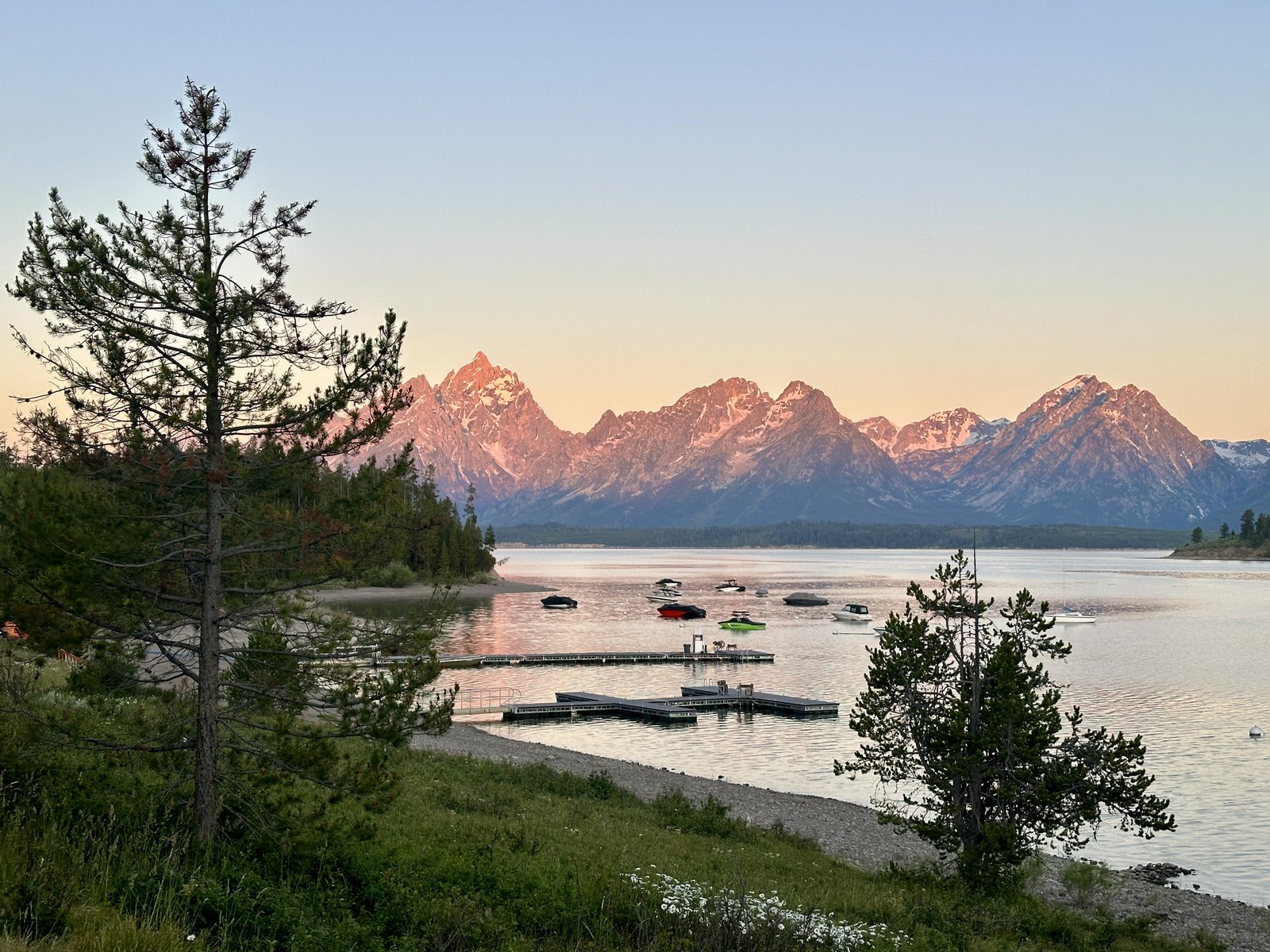
Two nights is not long for Yellowstone. It is a park the size of a small country, and the drives between its famous places are longer than they look on the map.
We did it anyway, with Grand Teton on the way in, and it worked better than it should have for one reason: we camped inside the park, so we were out at first light and still out at dusk instead of driving in from a town an hour away.
Grand Teton first, because they are connected
The two parks share a boundary, and the road between them takes under an hour. Treating them as one trip is the obvious move, and it means you can watch the Tetons appear before Yellowstone swallows your attention.
They rise straight off the valley floor with no foothills in the way, which is why they look unreasonable from the first moment you see them.
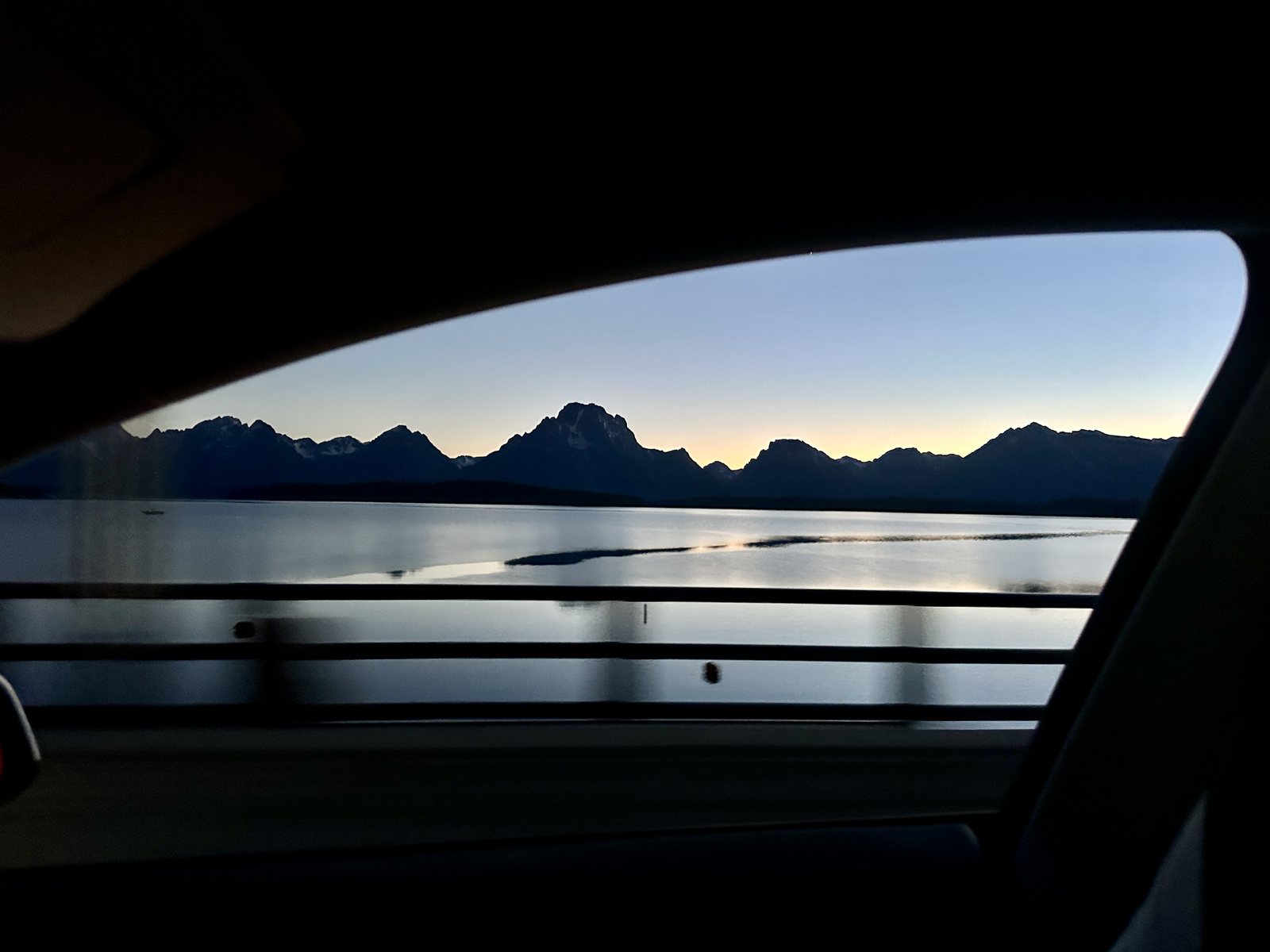
Even the drive in is worth staying awake for.
Where we stayed: Canyon campground
Canyon turned out to be the best decision we made. It sits higher than the campgrounds down in the valleys, and the altitude means far fewer mosquitos. That is not a small thing in July. It also puts you close to the canyon itself, which is the part of the park we would tell you to see first.
The geysers, and when to see them
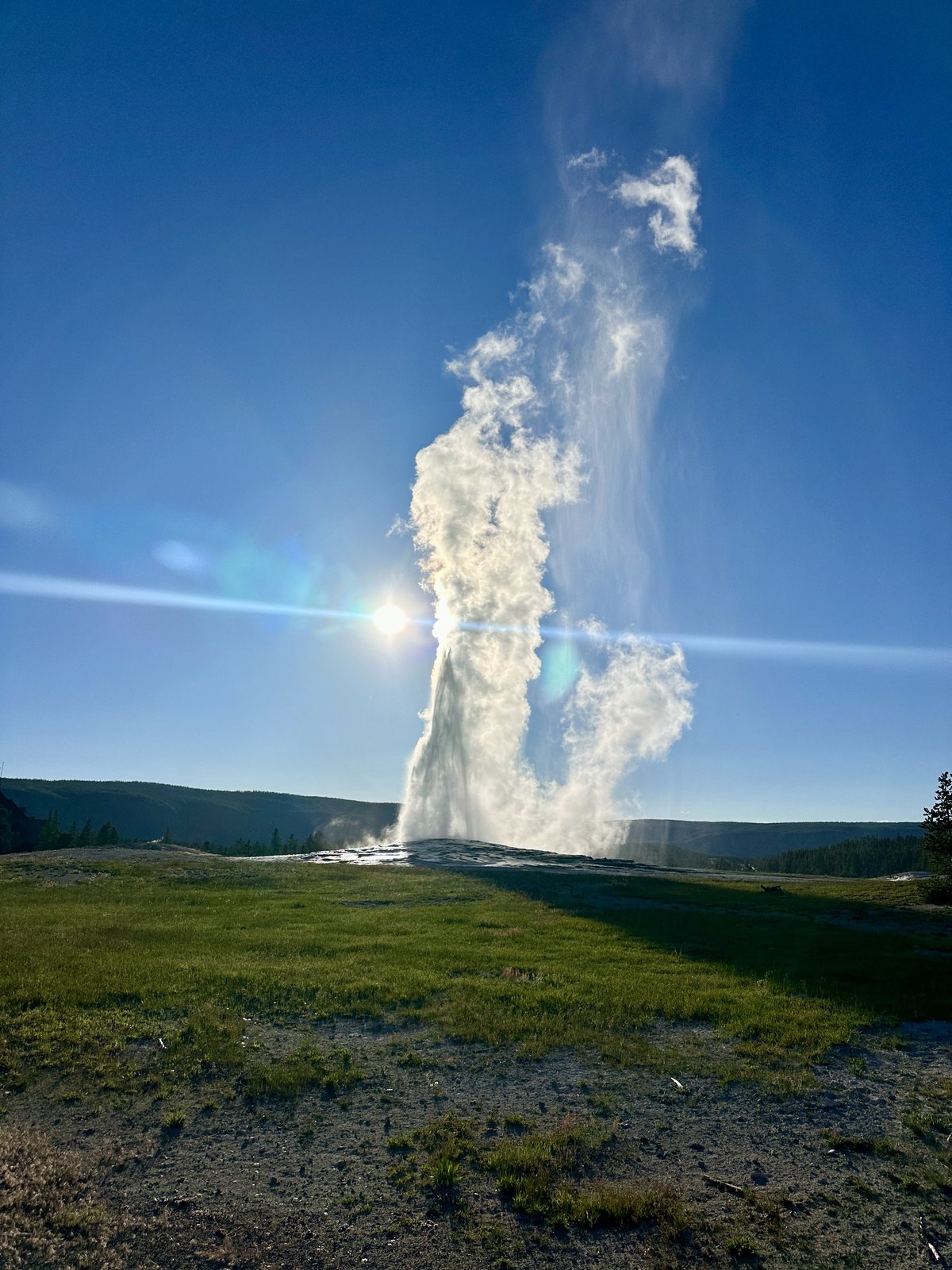
Old Faithful is exactly what you expect, and it is still worth standing there for. Predictions are posted at the visitor centre and on the park app, so you can time it rather than wait.
Grand Prismatic is the one to plan around. Midday sun gives you the colour, but the steam is thickest in the cool of the morning and can hide the whole thing.
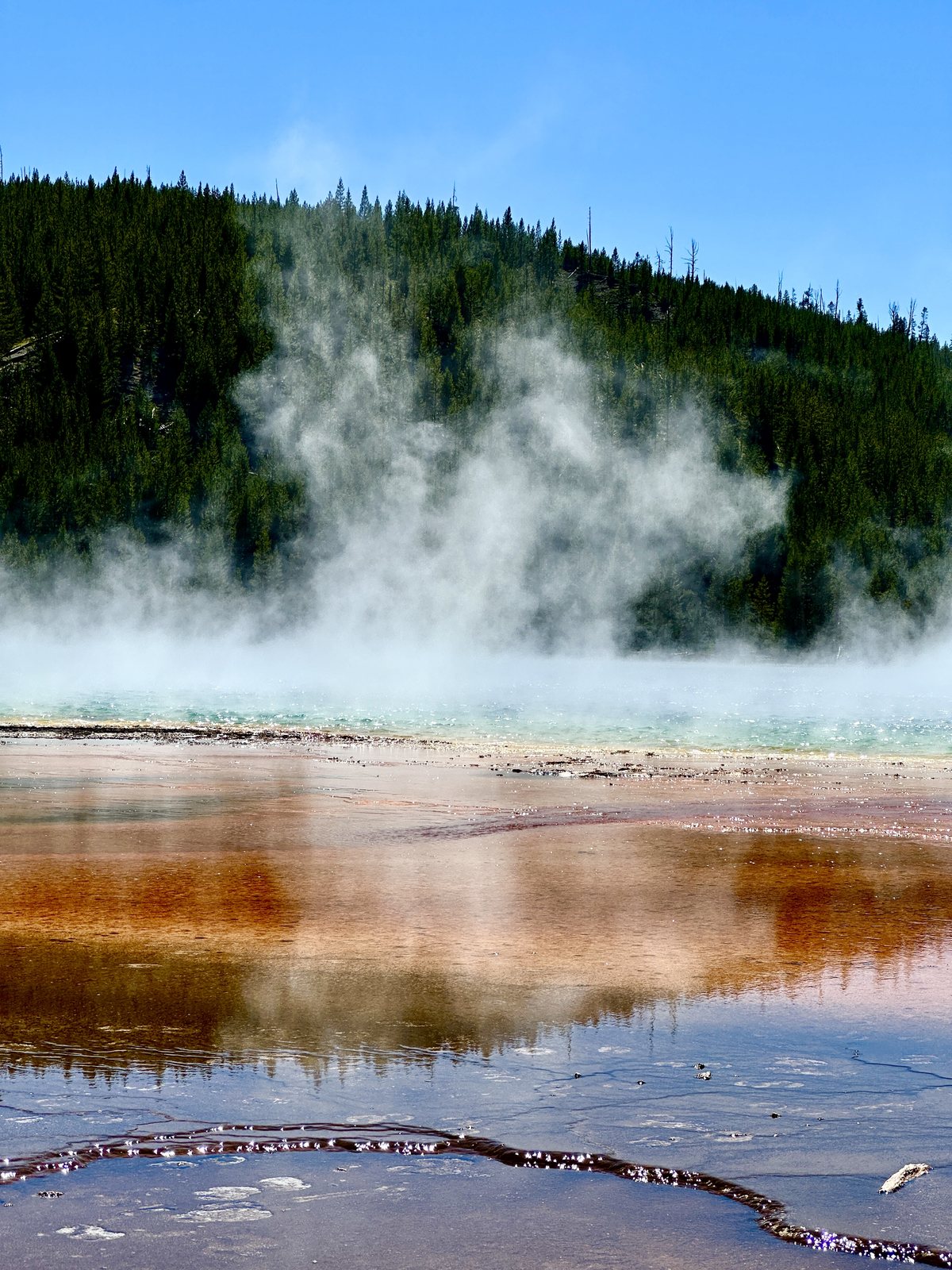
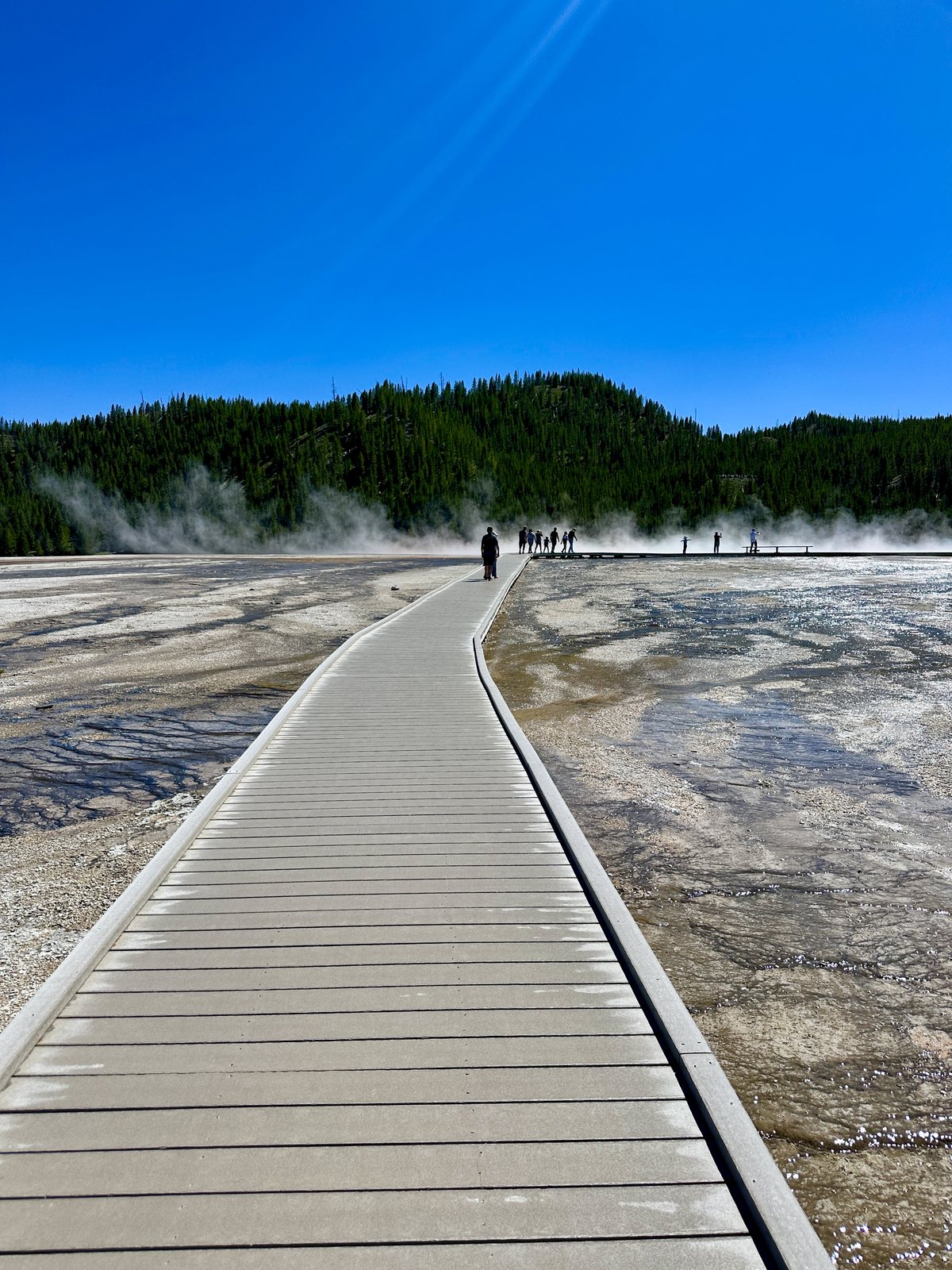
Hold onto your hat, and we mean that literally. The wind comes across the basin without warning and the spring had so many hats sitting on it that it looked like a hat rack. Once one is out there it stays there, because nobody is allowed to go and get it.
Stay on the boardwalks. The crust is thinner than it looks and the water is hot enough to kill, which the park says plainly and people still ignore.
The smaller springs get overlooked and should not be.
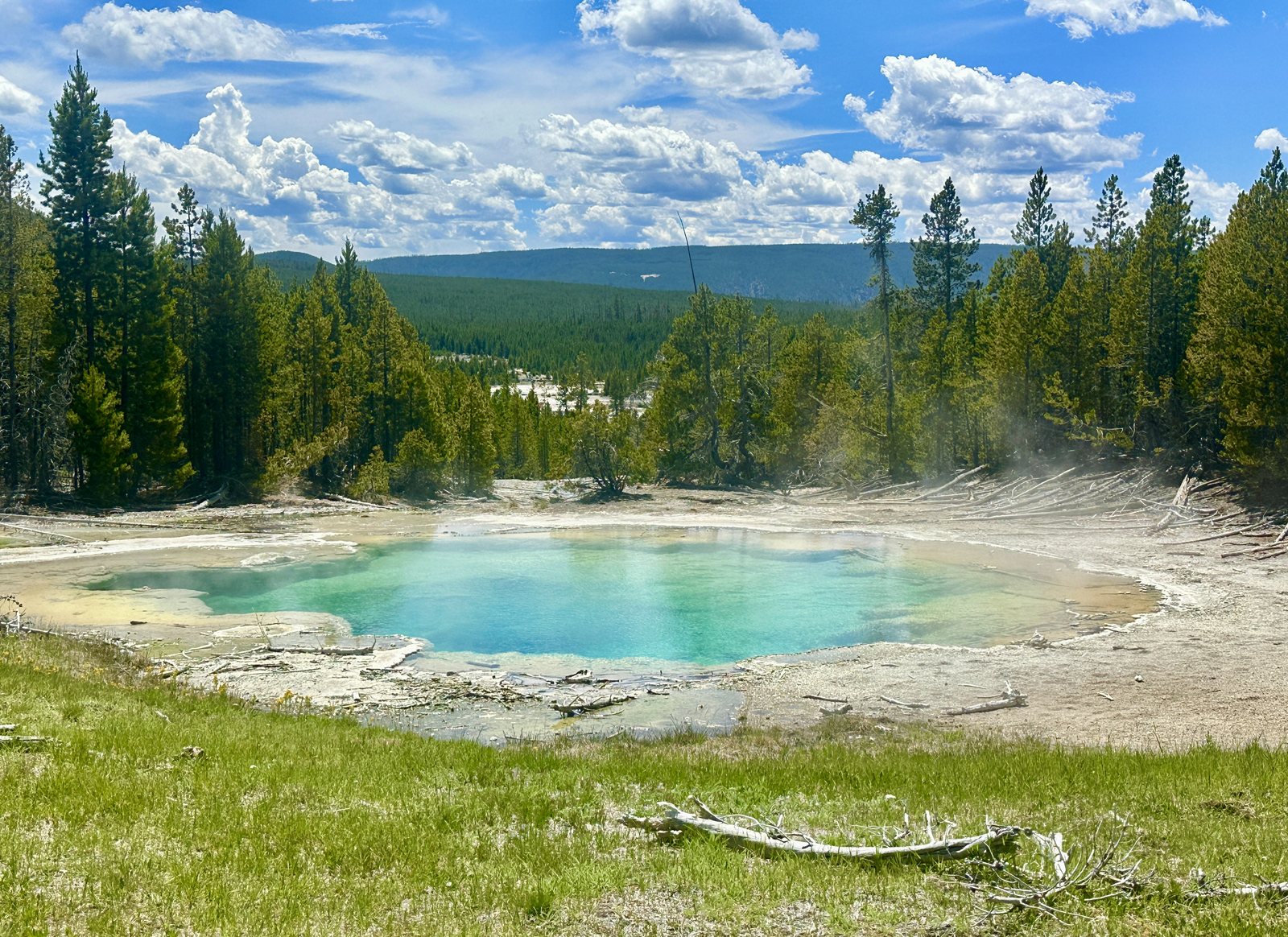
Mammoth Hot Springs
Different from the rest of the park. Instead of pools, white travertine terraces build up in steps, like something poured rather than grown.
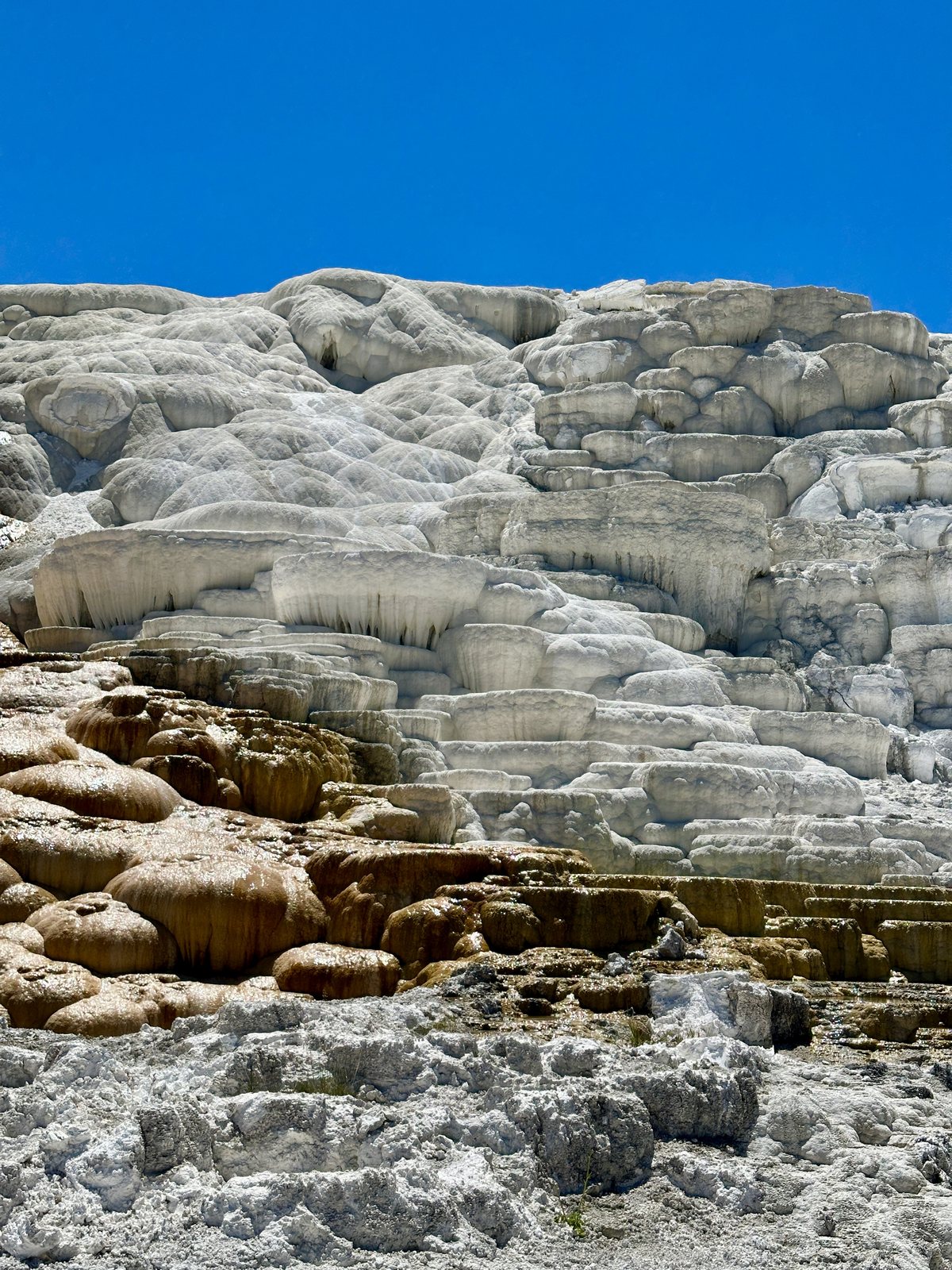
It is at the north end, so it needs planning into your route rather than squeezing in.
The canyon
Yellowstone has its own Grand Canyon, and it is the part that surprised us most. Nobody mentions it alongside the geysers, and it should be first on the list.
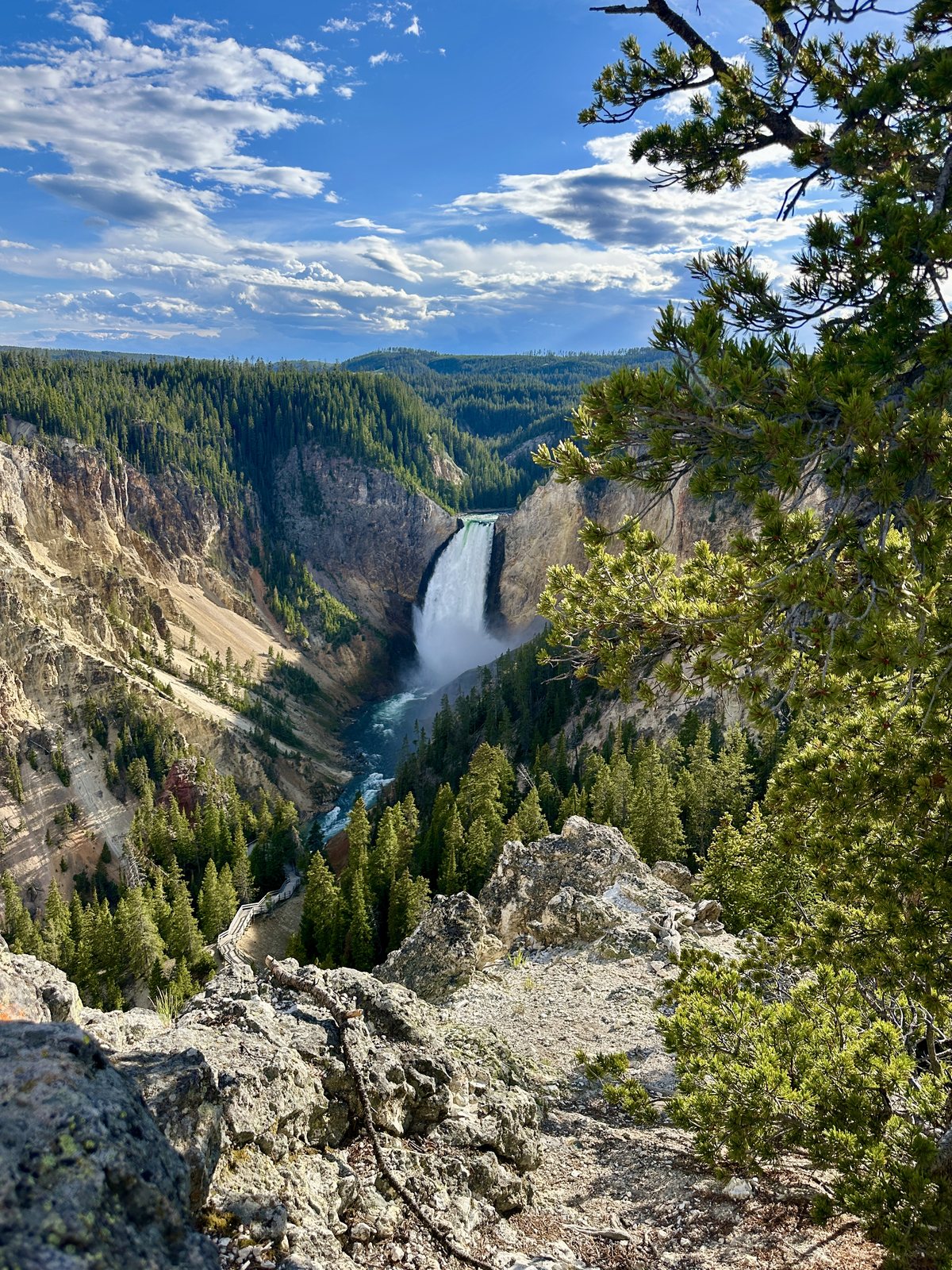
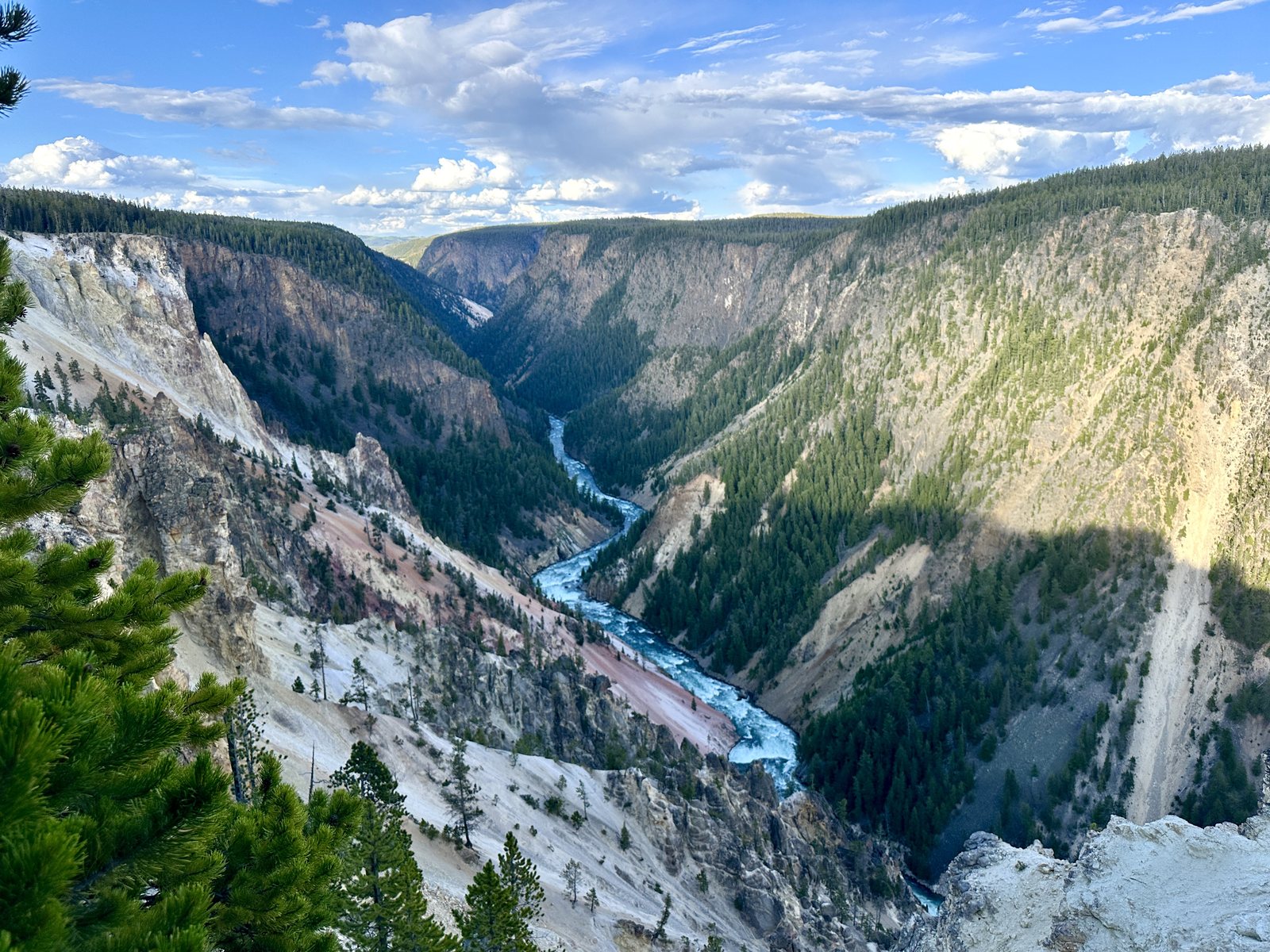
The rock really is that yellow. That is where the park’s name comes from.
The animals are the point
We saw more in two mornings than we expected in a week.
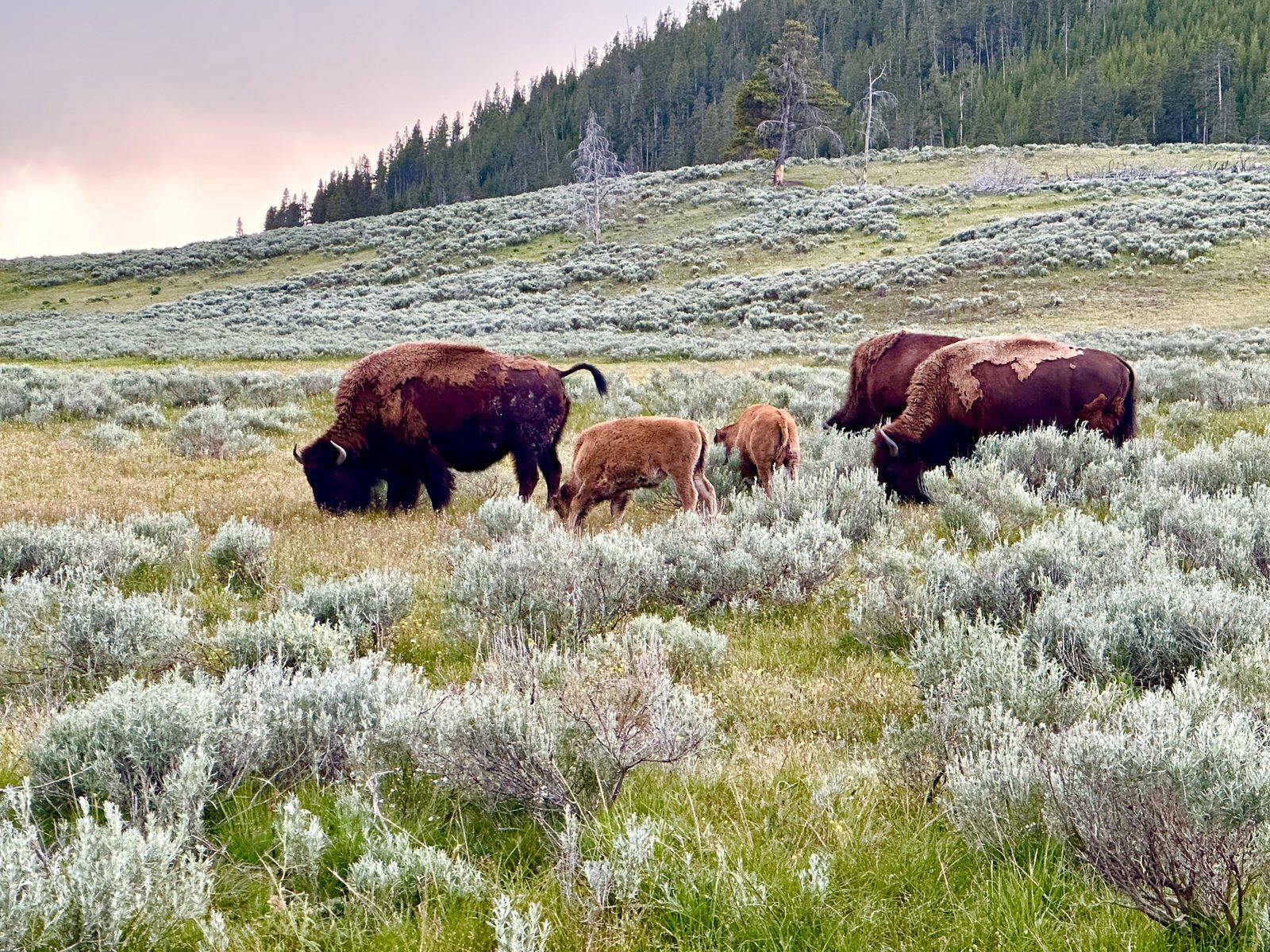
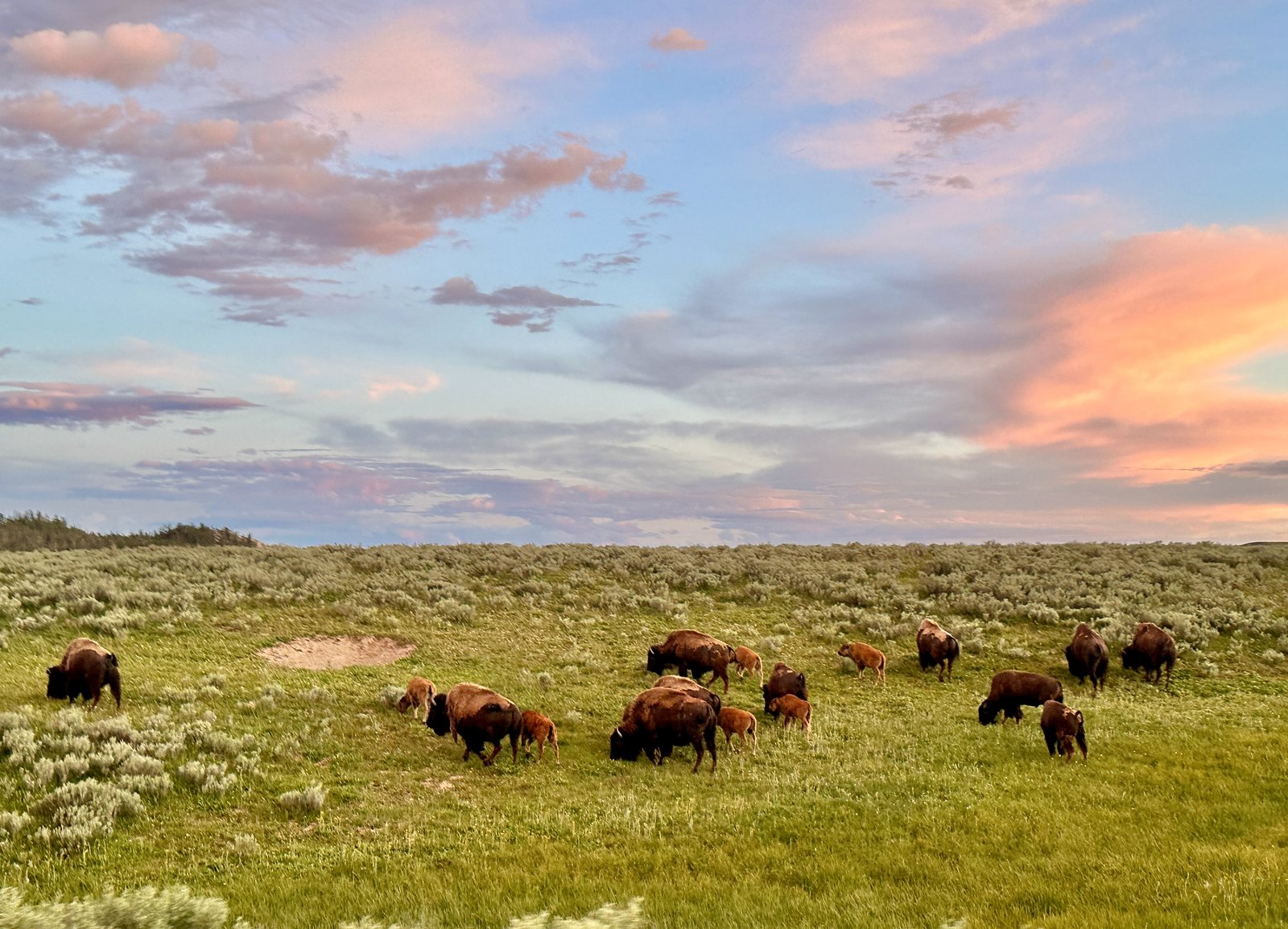
Bison are everywhere and entirely unbothered by cars. Expect to meet them on the road itself as you drive over the mountain, standing in the lane with nowhere for you to go. Wait. They move when they are ready.
In July the calves are out with them, still orange. Spring and early summer are when the young animals are about, which is a good reason to come then rather than in August.
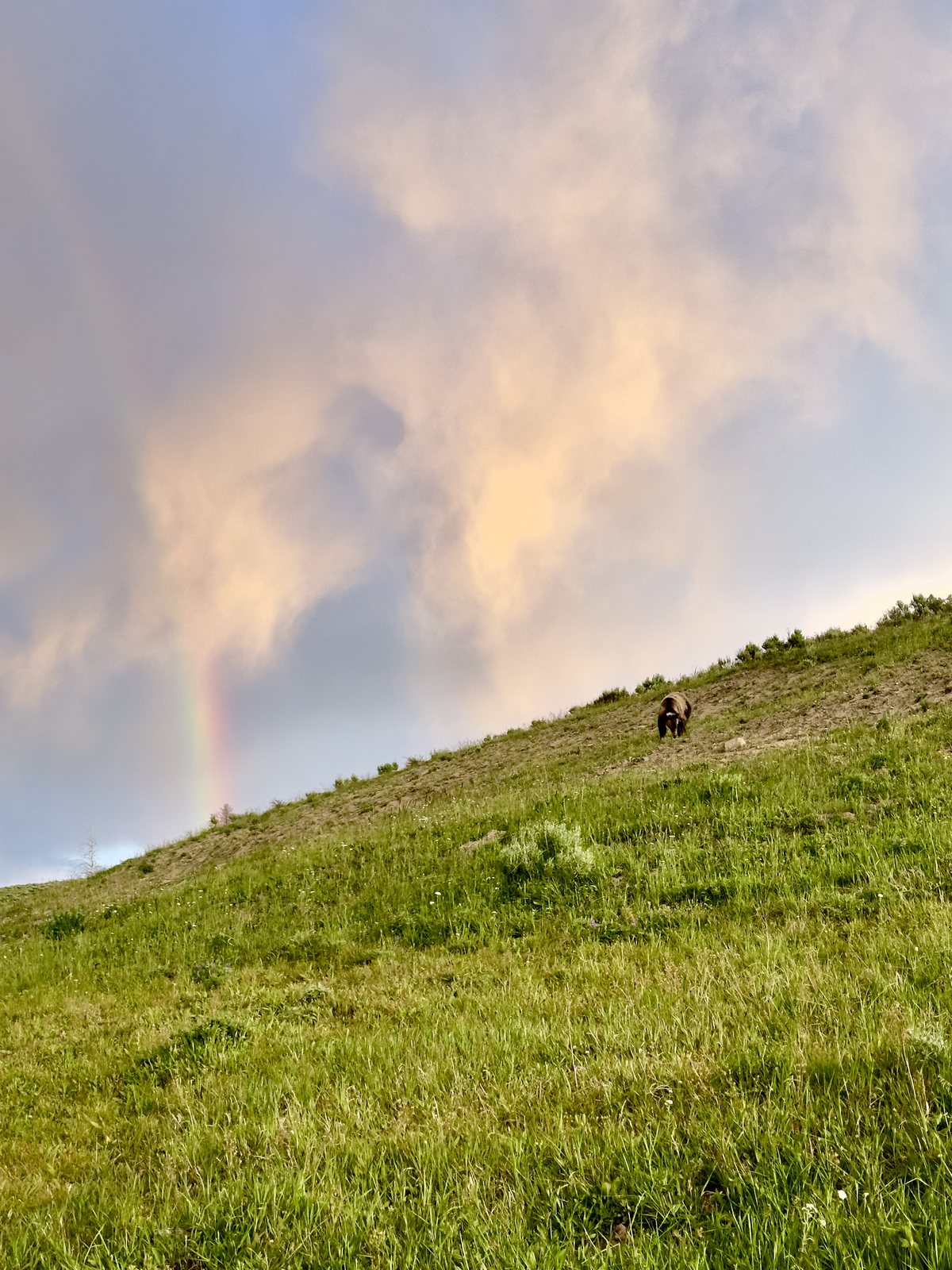
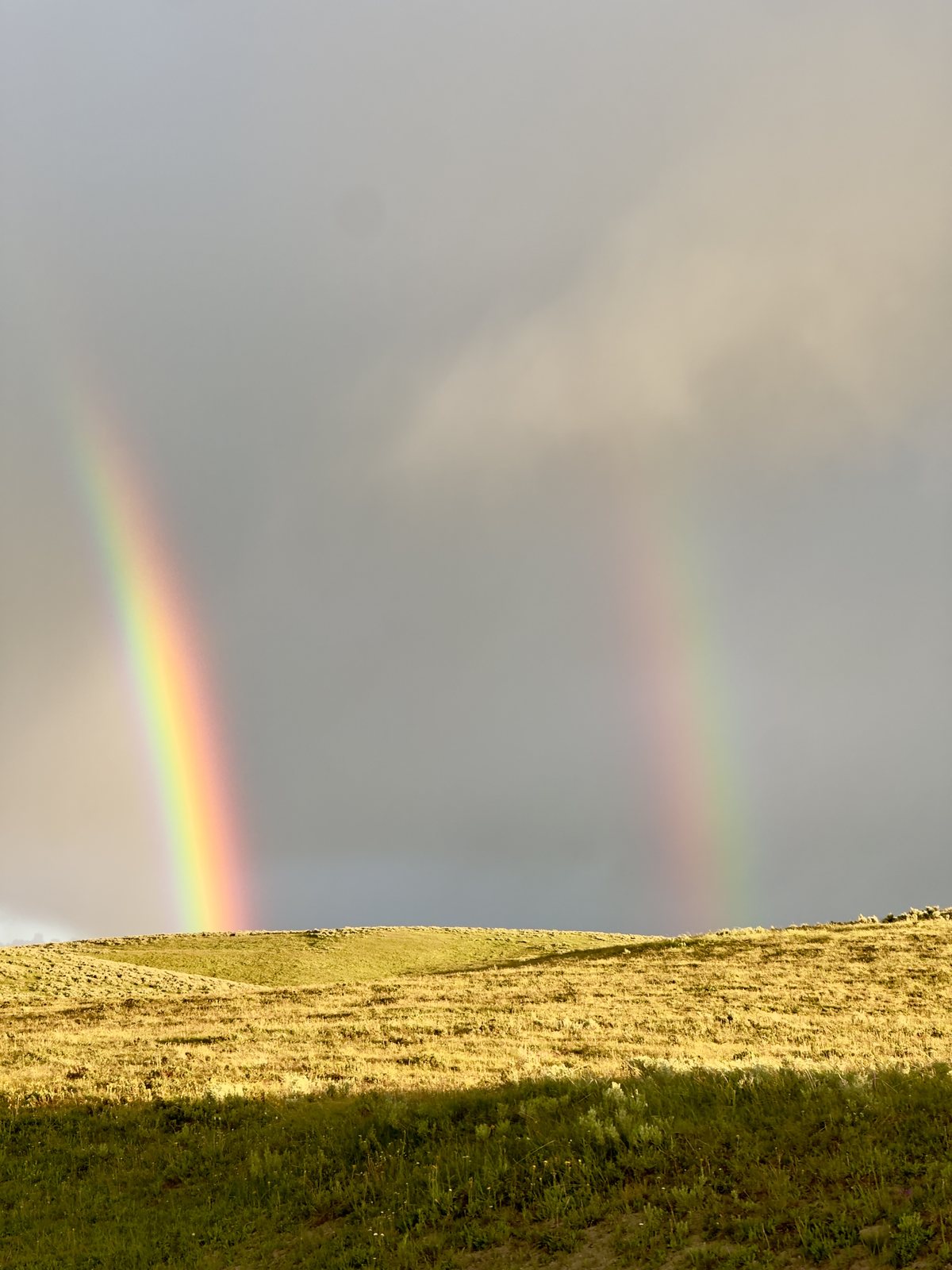
Then this happened, which we did not earn and will not repeat: a grizzly working along a hillside with a rainbow coming down behind it.
We never saw a wolf. We heard them though, howling at night from the campground, which was somehow better than a distant shape through a spotting scope would have been.
Warning
Keep your distance. 100 yards from bears and wolves, 25 from everything else, including the bison standing calmly beside the road. People are injured here every year and it is nearly always because they walked closer for a photo.
Lamar Valley, and getting the timing wrong
Lamar is the valley everyone points you to for animals, and we went in the middle of the day. There was a grizzly, so it was not wasted, but the light was flat and the valley did not look like the photographs.
Go at the shoulders of the day instead. Early morning or the last hour before dark. That is the one thing we would take back.
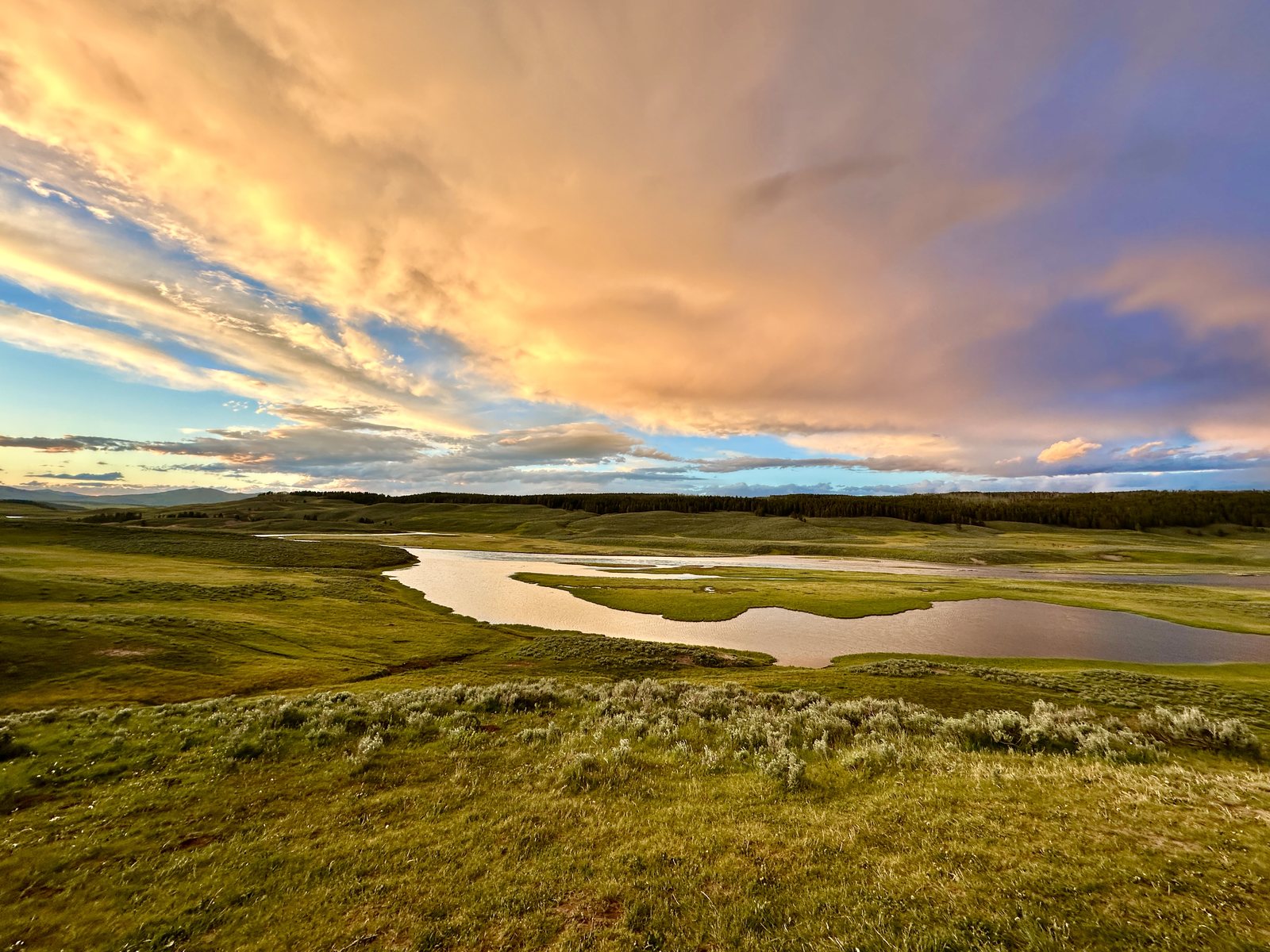
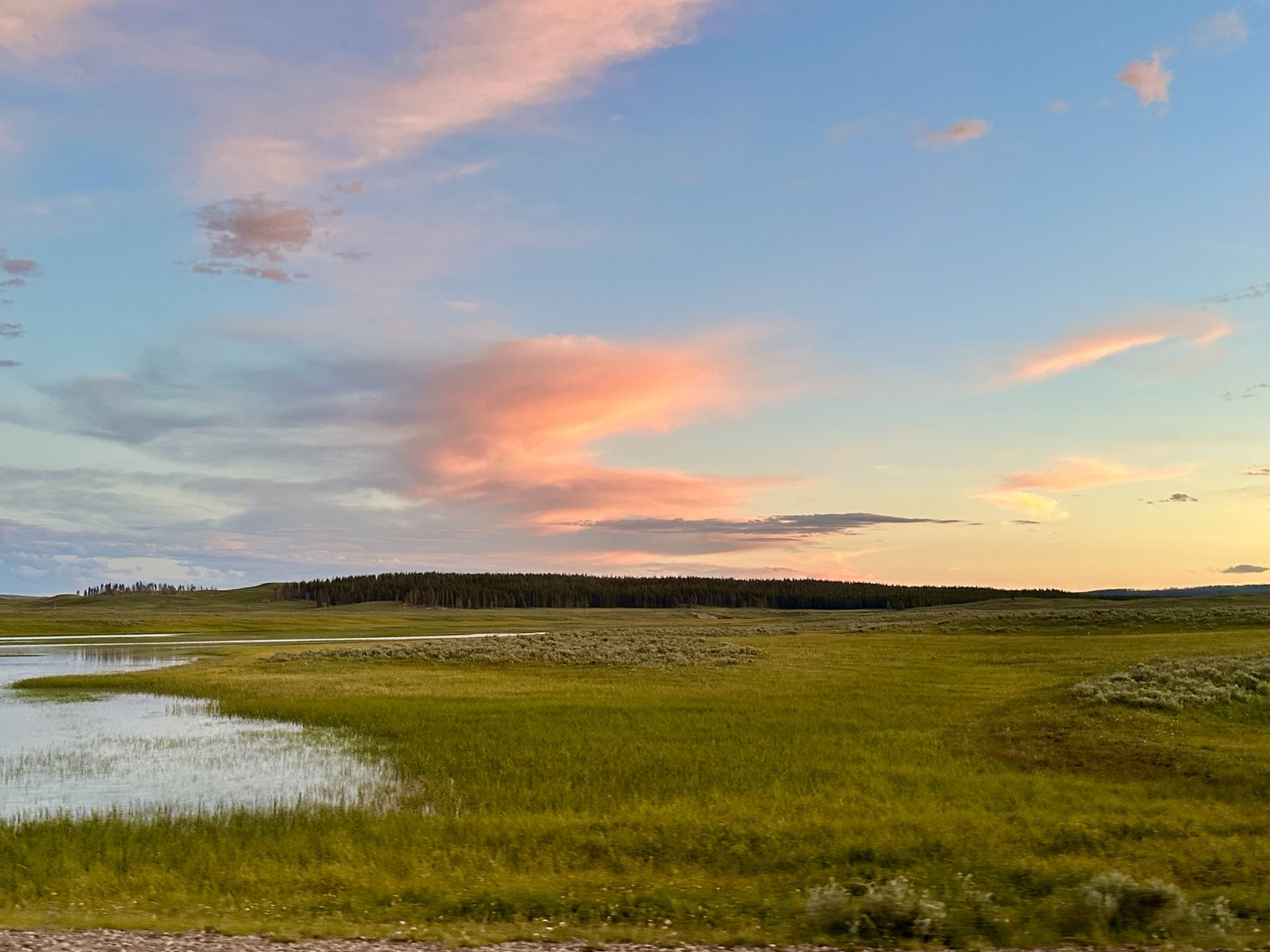
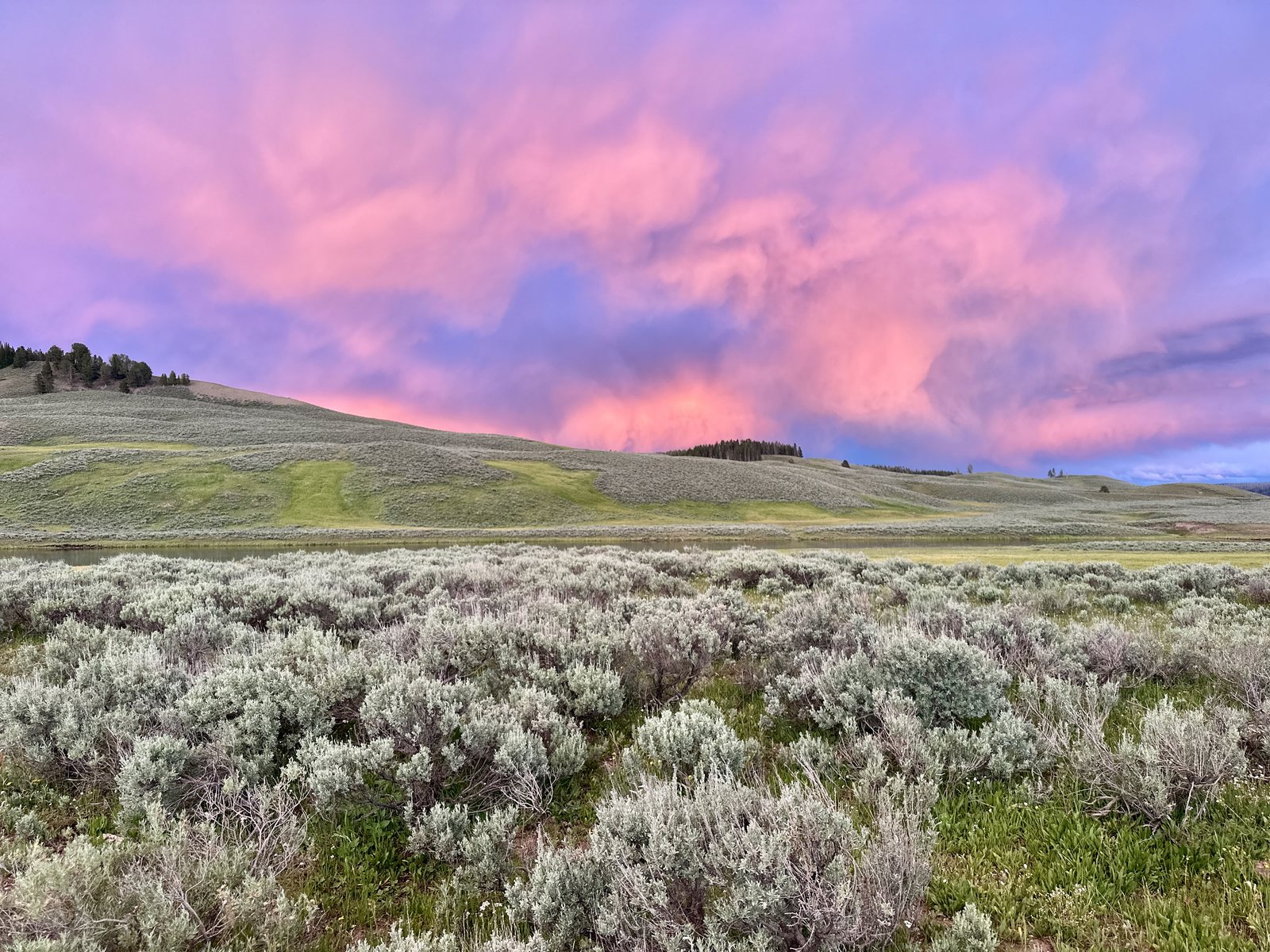
The light is the reason to get up
The middle of the day in July is crowded and flat. The hours either side are neither.
1 of 4
Storms roll through most summer afternoons, which is where the rainbows come from. A wet afternoon is not a ruined one here.
What we would do differently
Three nights, not two. We were always driving toward the next thing. Another night would have meant staying still somewhere.
Book far ahead. Campsites and lodges inside the park go months in advance, and staying outside adds an hour at each end of the day.
Fill the tank when you see a station. They are far apart and the distances between park landmarks are longer than the map suggests.
Do the canyon early. It was the best thing we saw and we nearly ran out of time for it.
If you are driving an electric car
Take the fuel advice above and treat it as a rule rather than a tip. Charging in and around the park was much harder than we expected, and we came closer to running out than we have anywhere else.
Two things make it worse than the map suggests. The distances between the famous places are long, and if you are sleeping in the car you are also drawing on the battery overnight rather than starting each morning full.
There is a proposal being voted on to put a Tesla supercharger inside the park. Until that exists, there are not enough chargers for the number of cars, so plan to charge whenever you can rather than when you need to.
Would we go back
Yes, and for longer. Two nights showed us the famous things. It did not leave room for the sitting still that makes a place stick, which is usually the whole point for us.
Still: a grizzly, a rainbow and a herd of bison in two mornings is not a bad return on a short trip.